Twenty years of T-Trak
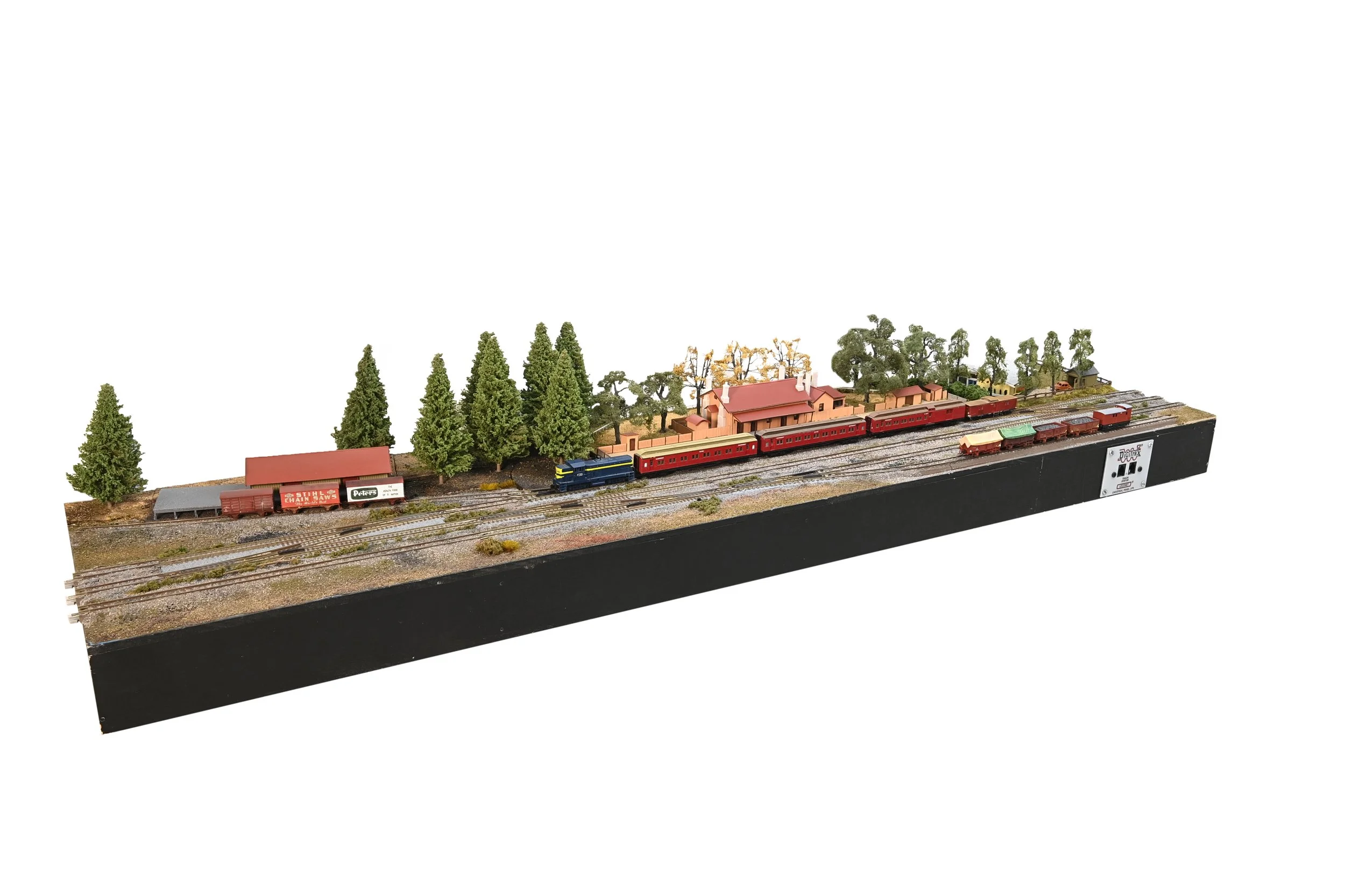
Quad module by Barry Fisher
Twenty Years of N Scale T-TRAK in Australia
This year marks 20 years of N Scale T-TRAK in Australia. The first Australian T-TRAK module was built in 2003 by Andrew George, after he read an article about the original design by Lee Monaco-FitzGerald. The American modeller’s innovation is recognised in the system’s name—the “T” comes from the name of her son, Thomas, who passed away in 1993.
Andrew displayed his first module at the 2003 N Scale Convention in Melbourne. The concept was later introduced to the MelbNTrak club and formally presented at the 2007 convention in Adelaide. From there, many convention attendees helped spread the concept around Australia, with both individual modellers and clubs adopting T-TRAK.
T-TRAK’s growth in Australia since the early 2000s has largely been attributed to its size and portability. There is no need for a spare room or large shed to enjoy a layout. Standard modules are easy to build at low cost and do not require expert carpentry skills. Kits are now also available, allowing modules to be constructed without the need for large power tools.
Because the system is modular, modellers can enjoy small, achievable milestones, often completing one module at a time. Modelling can be either freelance or prototypical, with a single scene per module or a carefully planned group of modules depicting a real location.
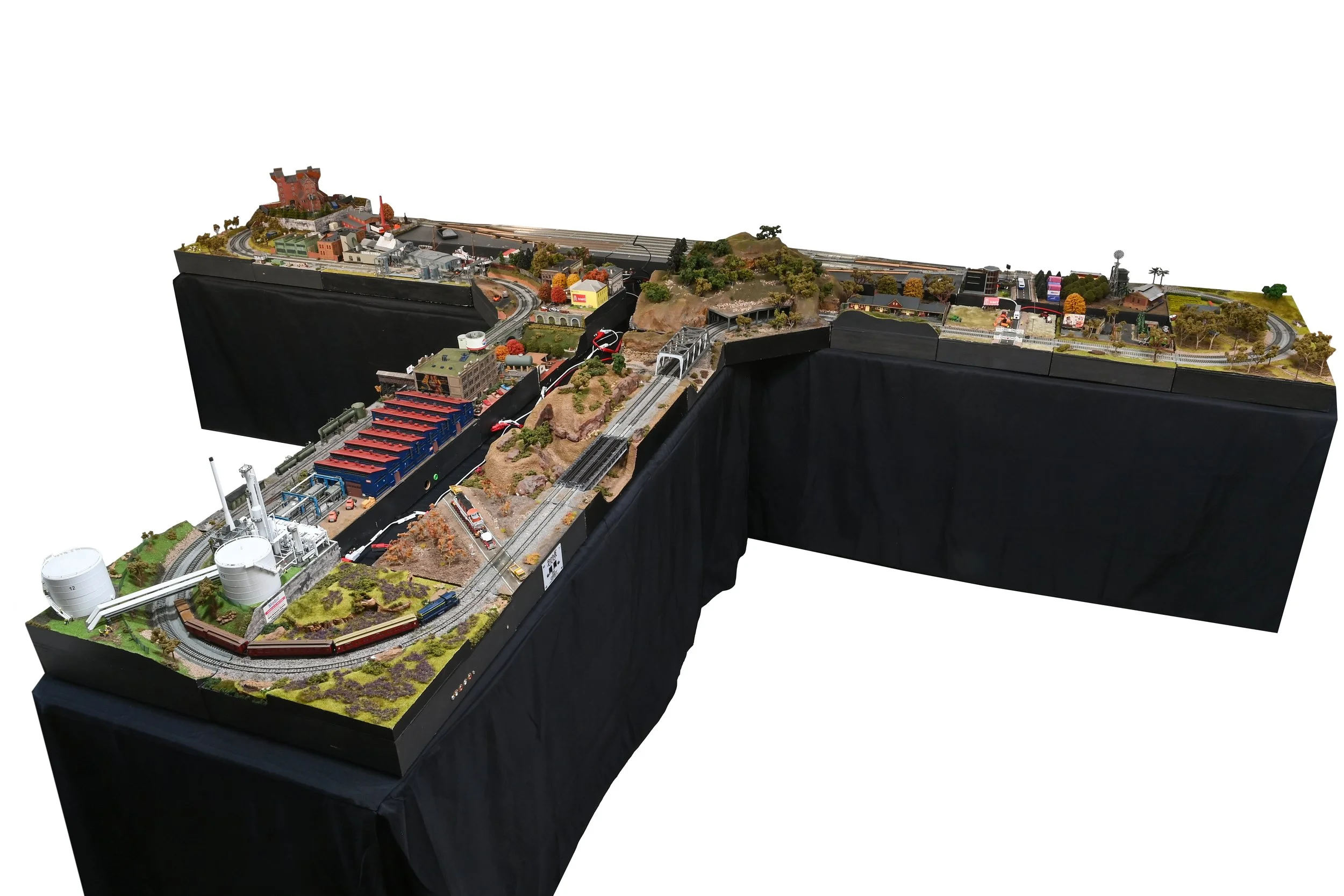
This growing field of N Scale modelling has also facilitated collaboration. The standardised approach enables modellers to combine their T-TRAK modules to create large layouts. Clubs such as the Victorian N Scale Collective, Canberra Monaro N Scale Group, and the Ipswich Model Railway Club regularly exhibit layouts composed of modules built by multiple members. With each interaction, expertise and ideas are shared.
T-TRAK modules also function as home layouts, moving away from large one-piece layouts or installations fixed to a wall. This allows modellers to display their home layouts—or parts of them—in public, receiving feedback from both fellow modellers and the wider community. The modular nature also makes it easy to take layouts when moving to a new home.
Over the years, modellers have adapted the T-TRAK system, and the guidelines have evolved. Early layouts supplied power through a single module, relying on track joiners to distribute power. This was later replaced by cables with RCA plugs connecting each module to a main power unit. More recently, with the adoption of DCC, Australian T-TRAK modellers have transitioned to a main track bus system connected using Anderson Powerpole connectors.
HO T-TRAK modules are also beginning to emerge. Today, the “T” in T-TRAK is commonly associated with “tabletop”, but the system still maintains strong connections to the original and groundbreaking ideas of Andrew George and Lee Monaco-FitzGerald.
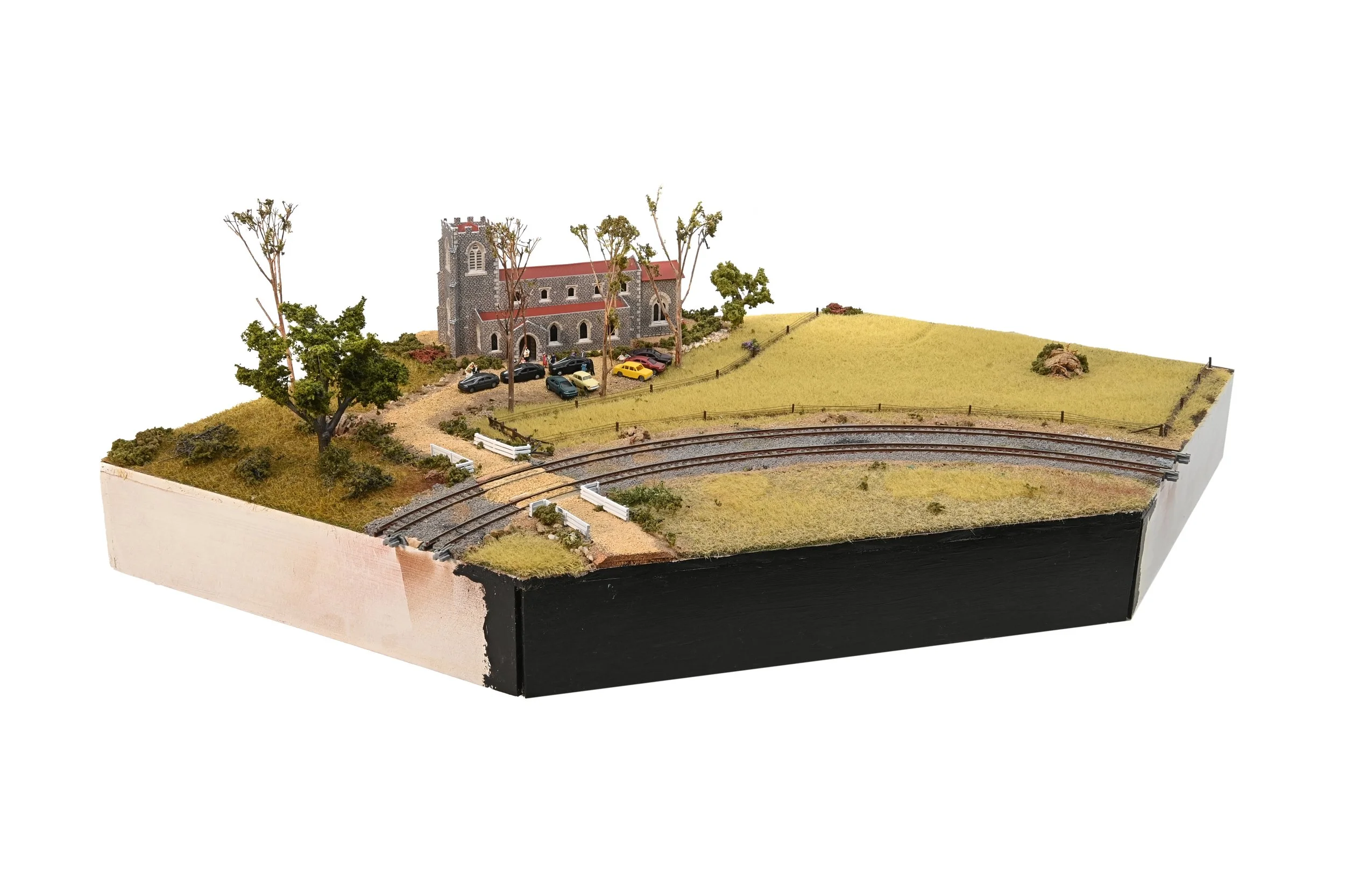
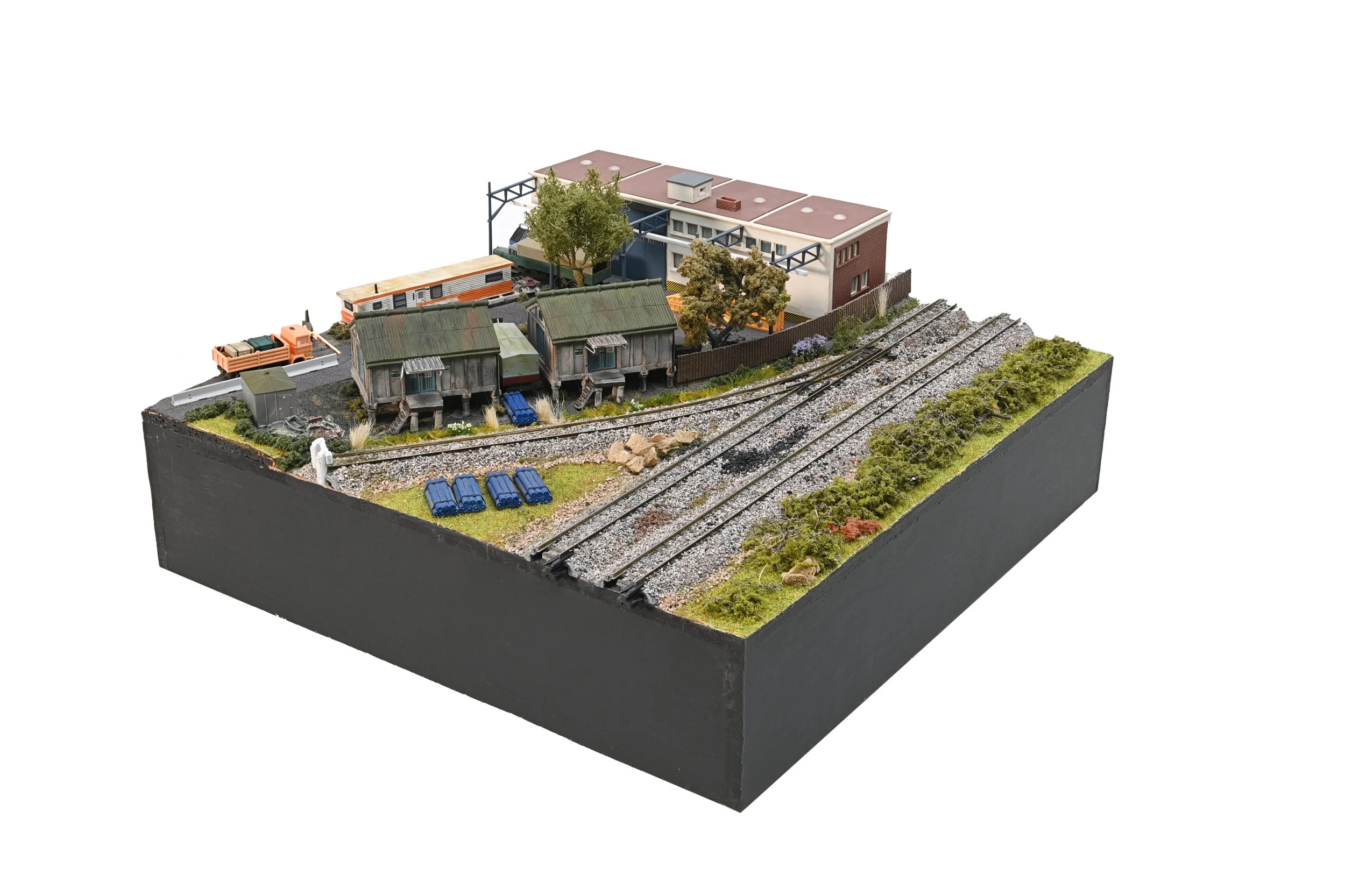
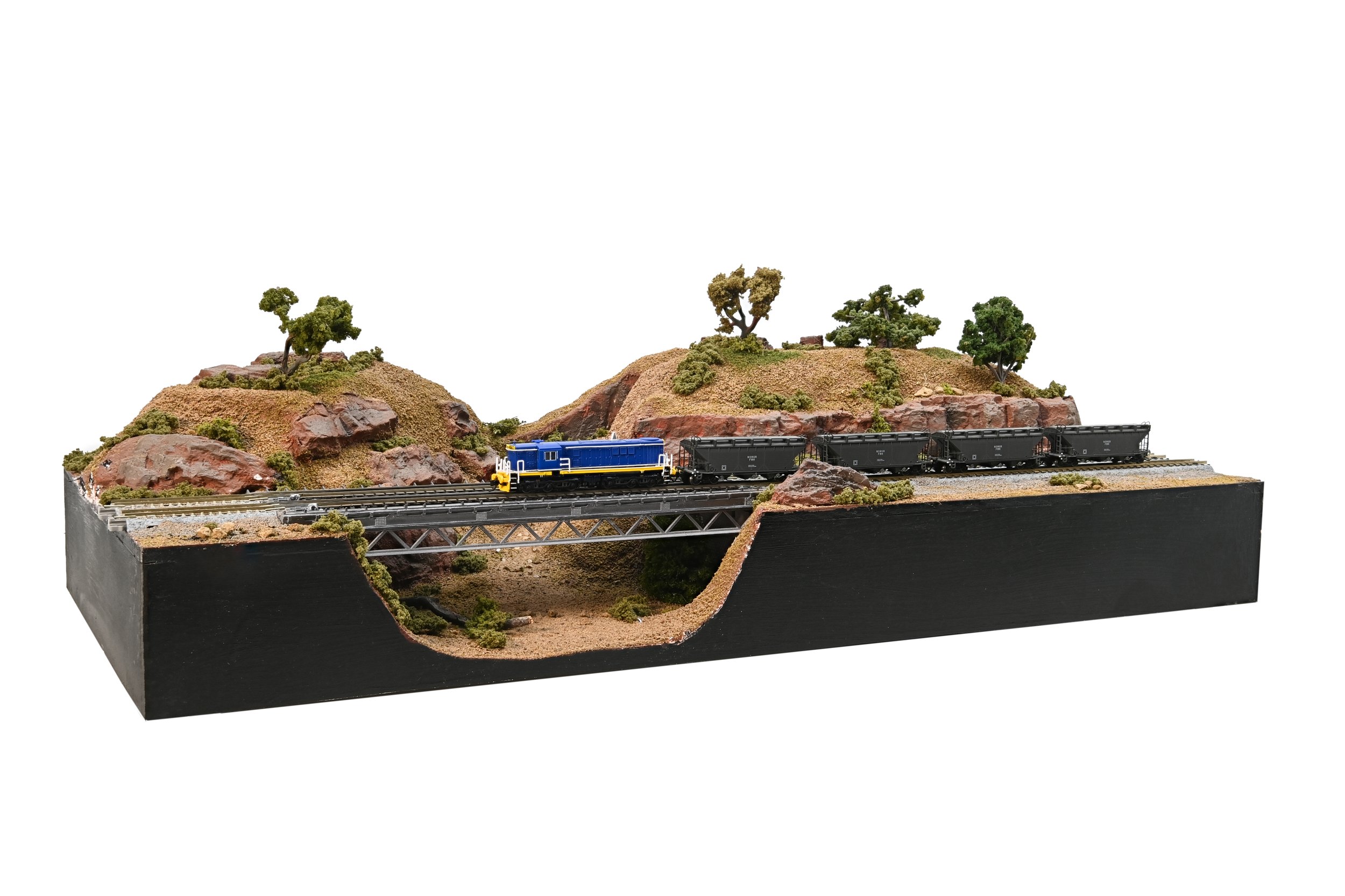
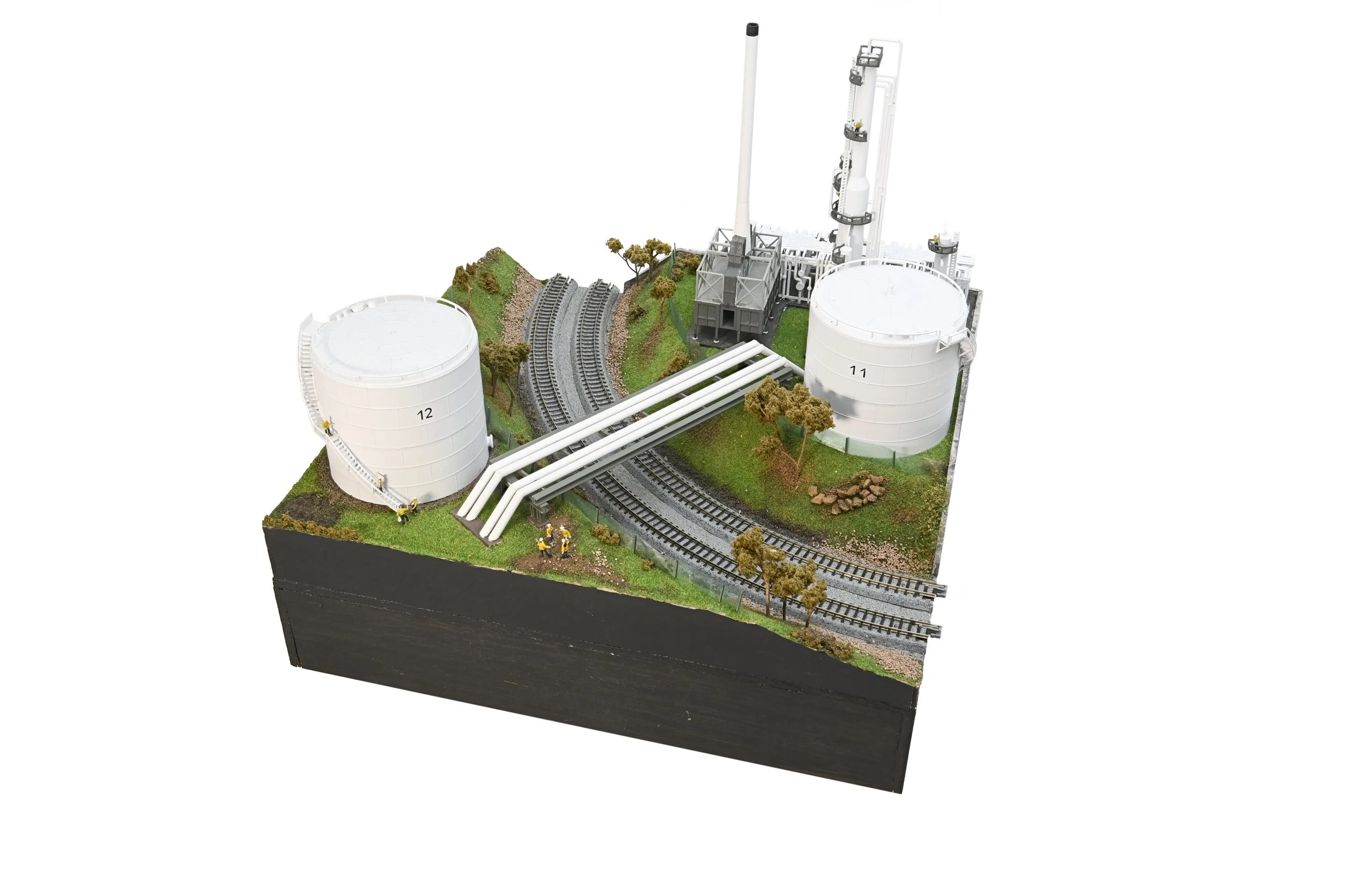
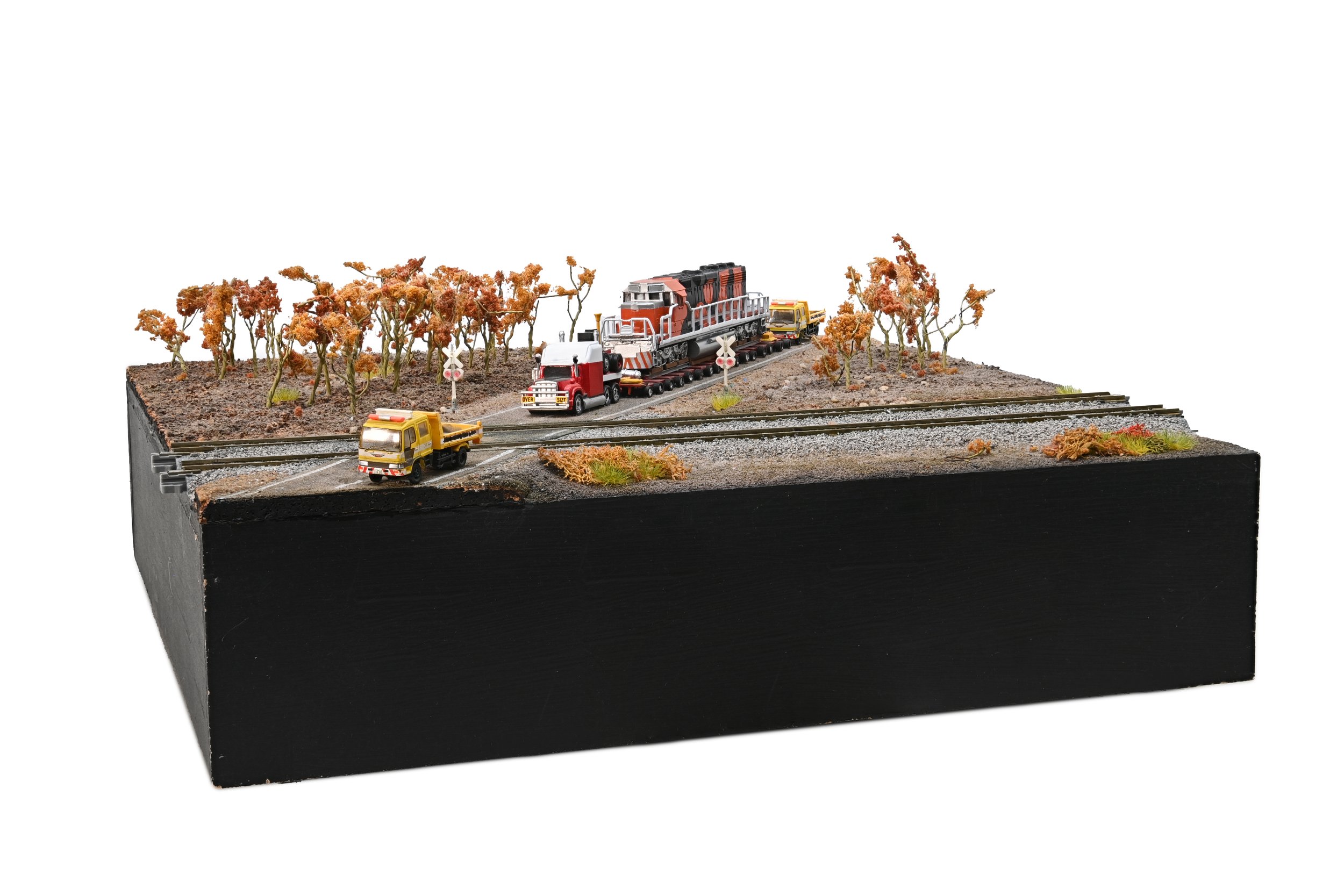
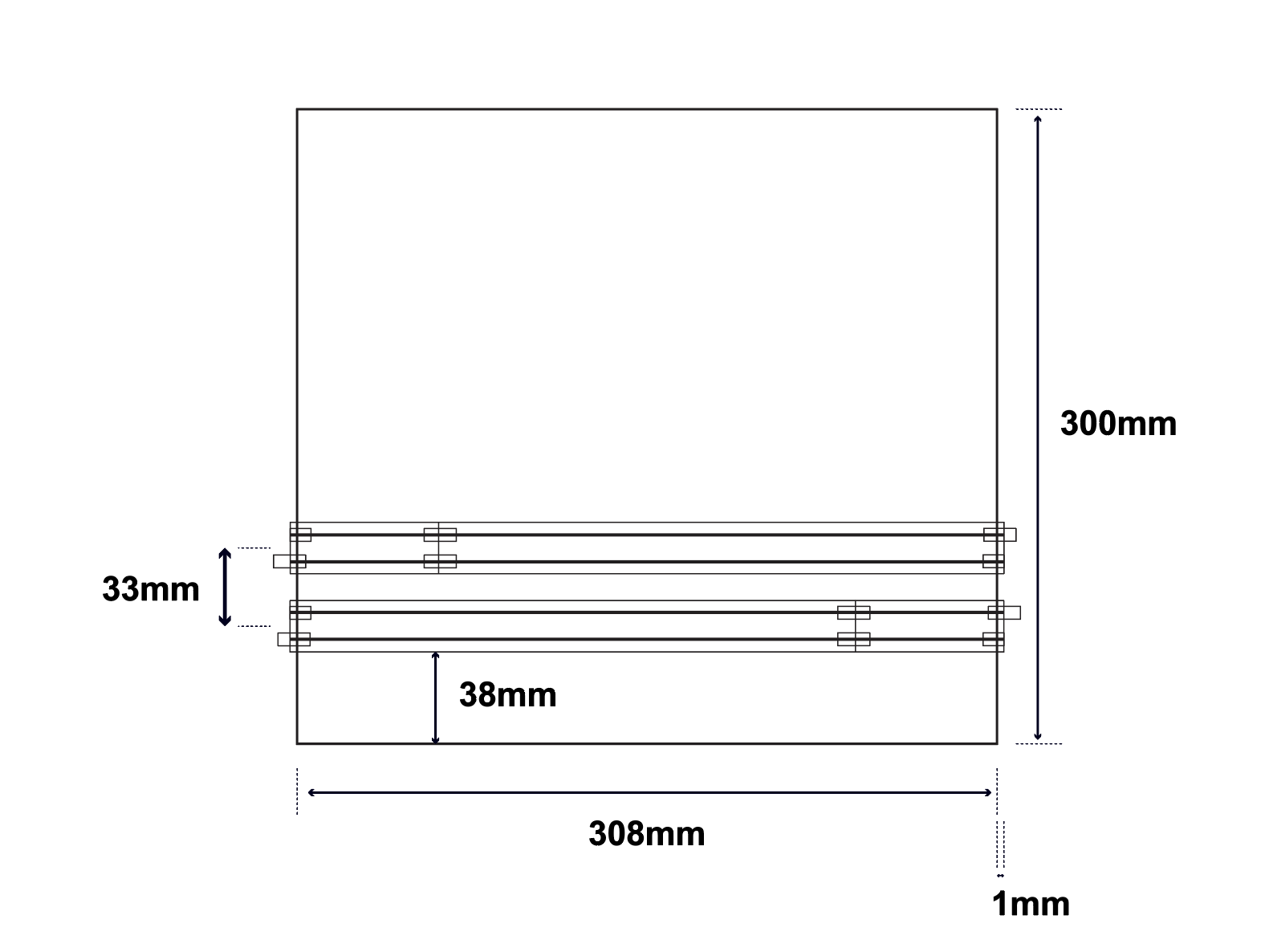
Single T-Trak Module
T-TRAK is a two-track N Scale tabletop modular system which relies upon the interlocking qualities of Kato Unitrack. The unique Unitrack joining method not only joins the tracks together but also facilitates a good electrical connection between adjacent modules.
The system has a standard single-length module baseboard, being 308mm long and 300mm from front to back, with the module height being 70mm (H).
The first track is positioned with the edge of the Kato Unitrack located 38mm from the front of the module. The two mainline tracks are 33mm apart (centre to centre). The most common modules are singles (310mm long track length) and doubles (620mm long) with 90 and 180 degree corner modules.
The base length is 2mm shorter than the track length, with a 1mm overhang at each end for easy, reliable joining.
More information about T-TRAK standards and how to build T-TRAK modules can be found here
https://sites.google.com/view/t-trak-in-australia-guidelines