Inland Rail Layout
Mark Jesser outlines the construction of an N scale layout for ARTC’s Inland Rail Project.
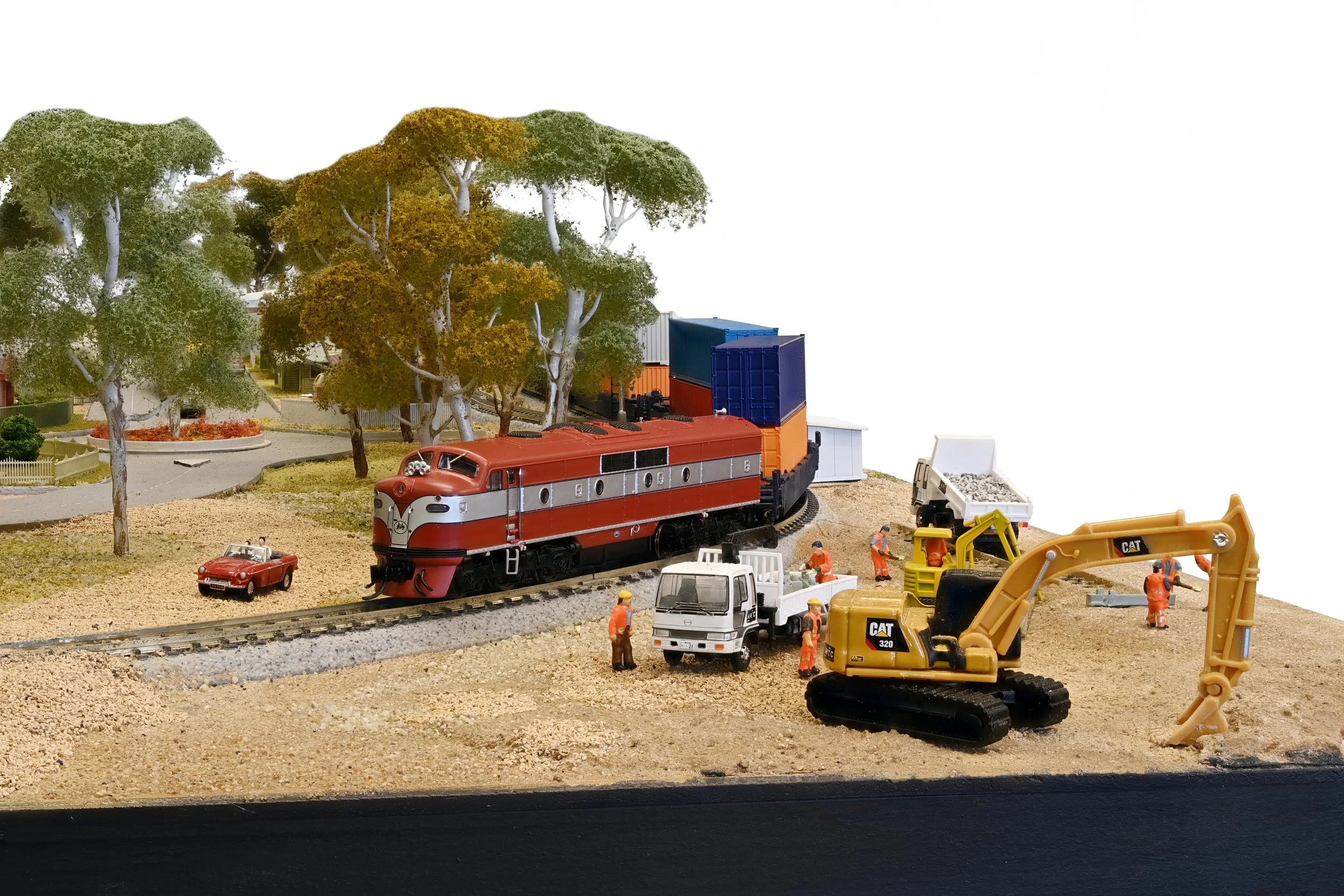
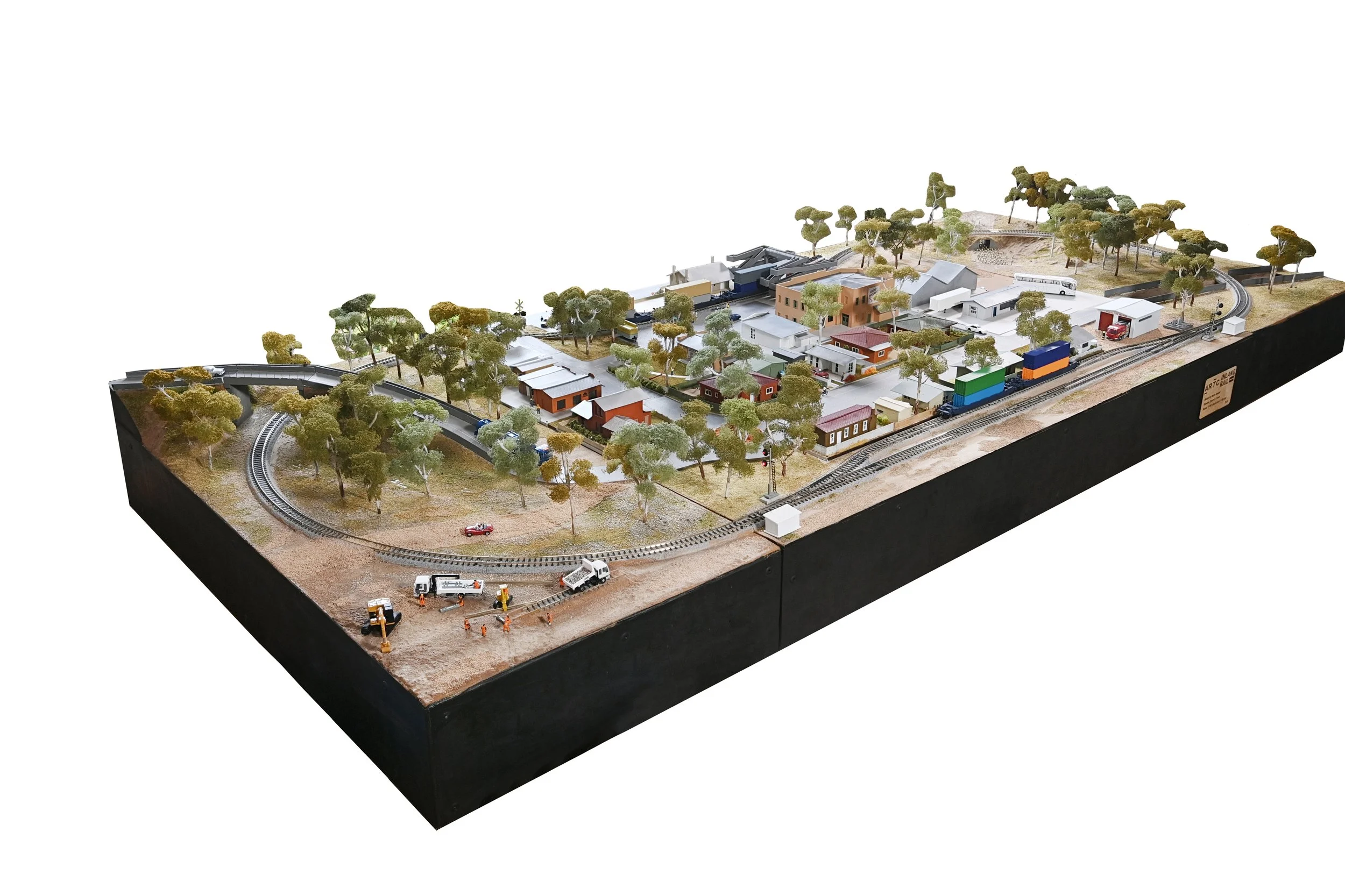
A layout was recently completed for the Australian Rail Track Corporation (ARTC) Inland Rail project’s community consultation team to help visually represent the works being undertaken between Melbourne and Brisbane.
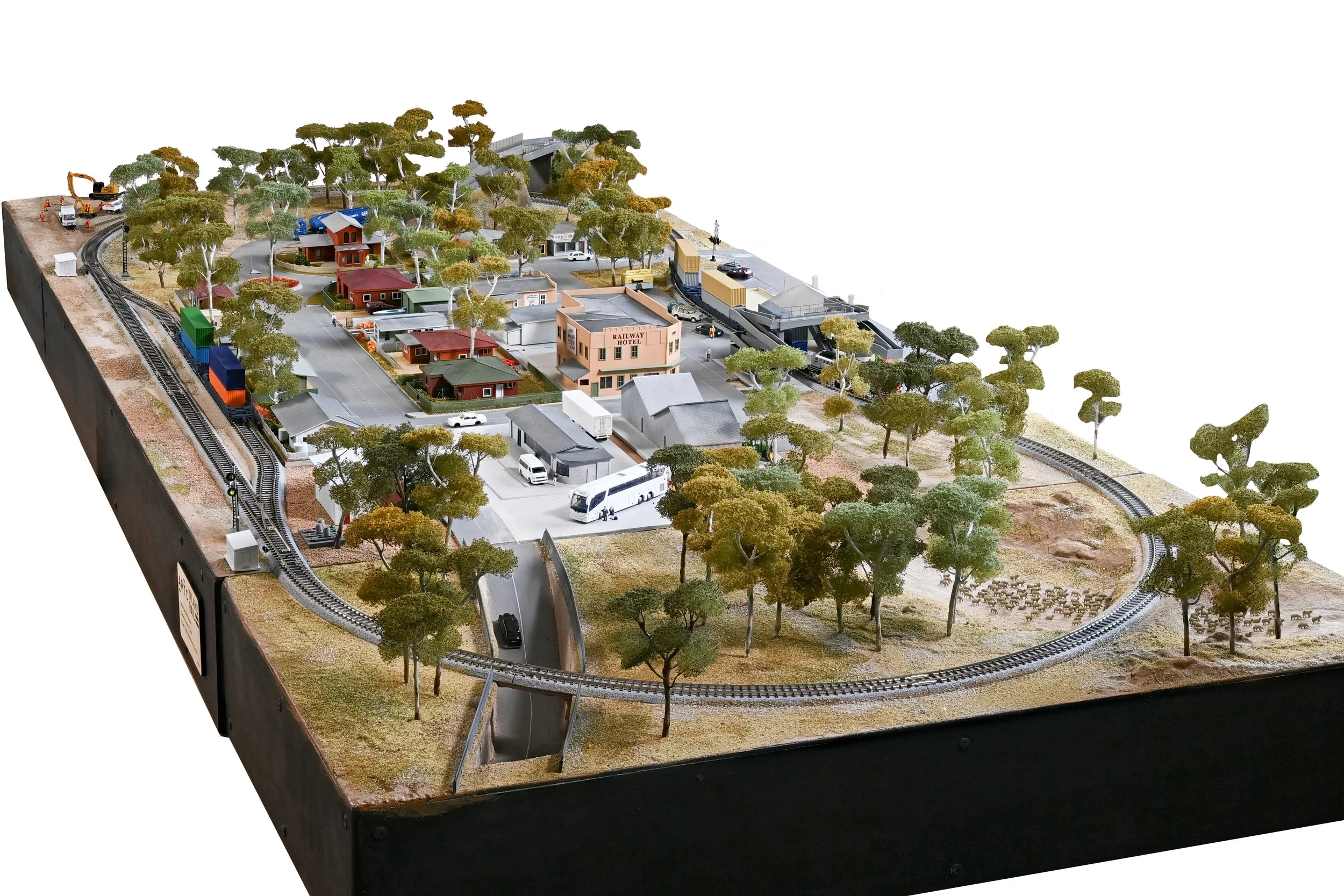
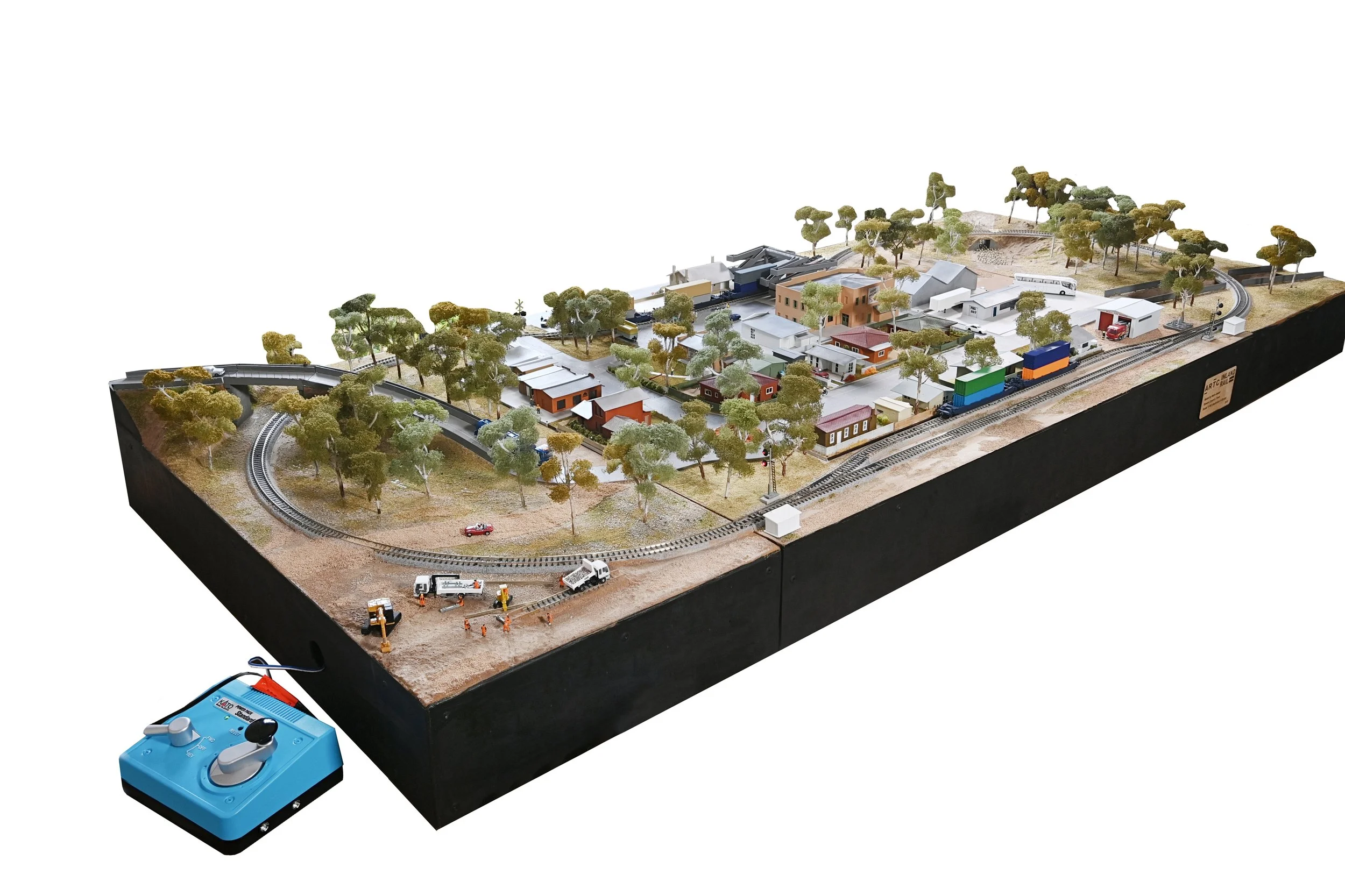
The layout needed to be small, portable, and easy to set up and operate, so the T-Trak format was chosen and simplified to a single main line. The four modules fit neatly on a non-folding Bunnings portable table: two long town modules and two end modules featuring the half-circle sections.
Train control is provided by a Kato DC controller. Electrical connections between modules use Anderson Powerpole connectors, ensuring quick setup, reliability, and durability.
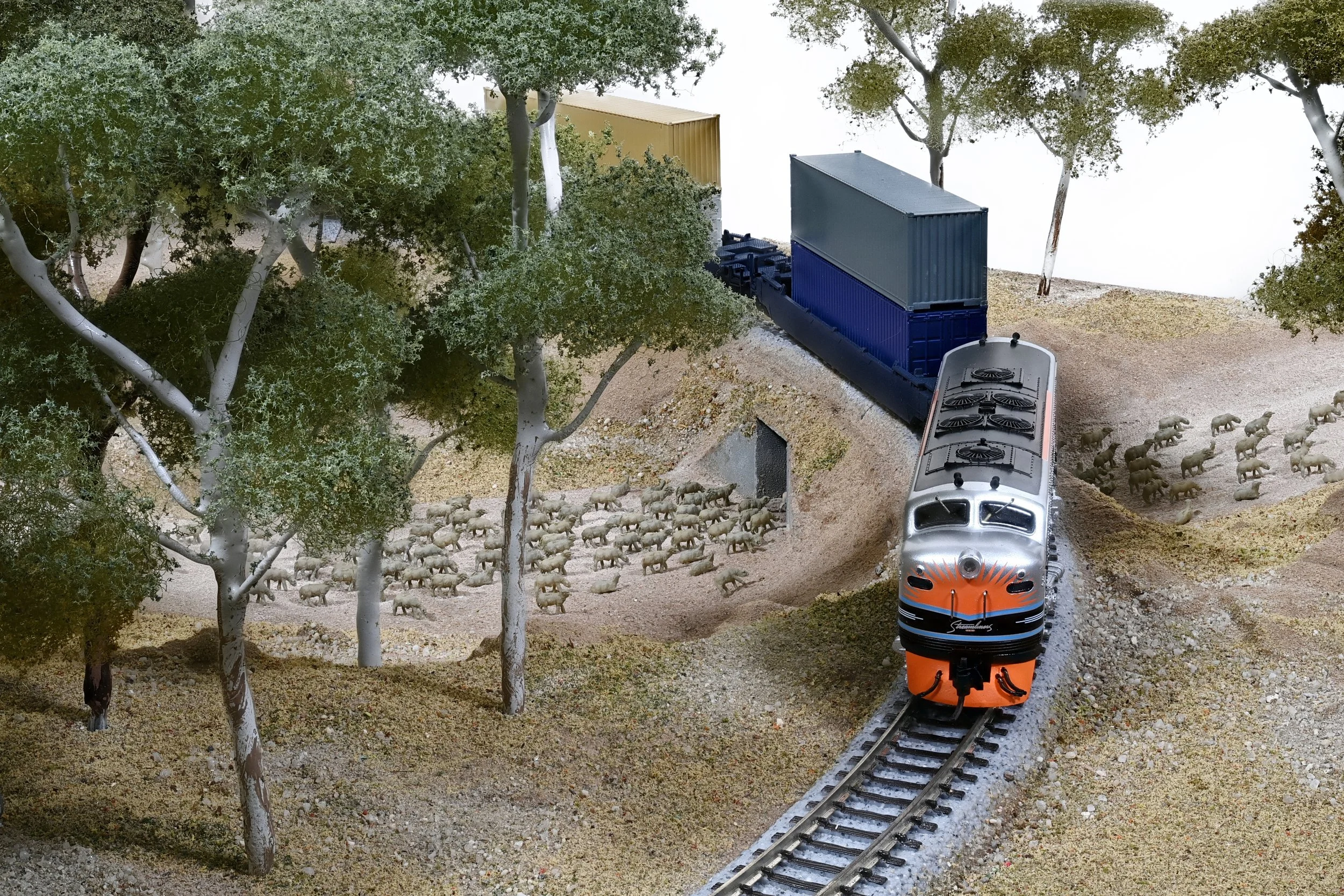
The brief required the layout to include a road overpass and underpass, a pedestrian overpass, a passing loop, a livestock underpass, a level crossing with flashing lights, and a passive level crossing with warning signs.
Layout and Photos: Mark Jesser
The entire layout was planned in Adobe Illustrator, which proved invaluable for positioning roads, building bases, and other features. This approach also allowed multiple iterations of laser-cut road pieces. The first roads were cut from 0.5 mm black styrene, but the adhesive used (Kwik Grip) caused bubbling and warping. The final version was laser-cut from 3 mm plywood, with 1 mm styrene added beneath structure bases to create the impression of gutters.
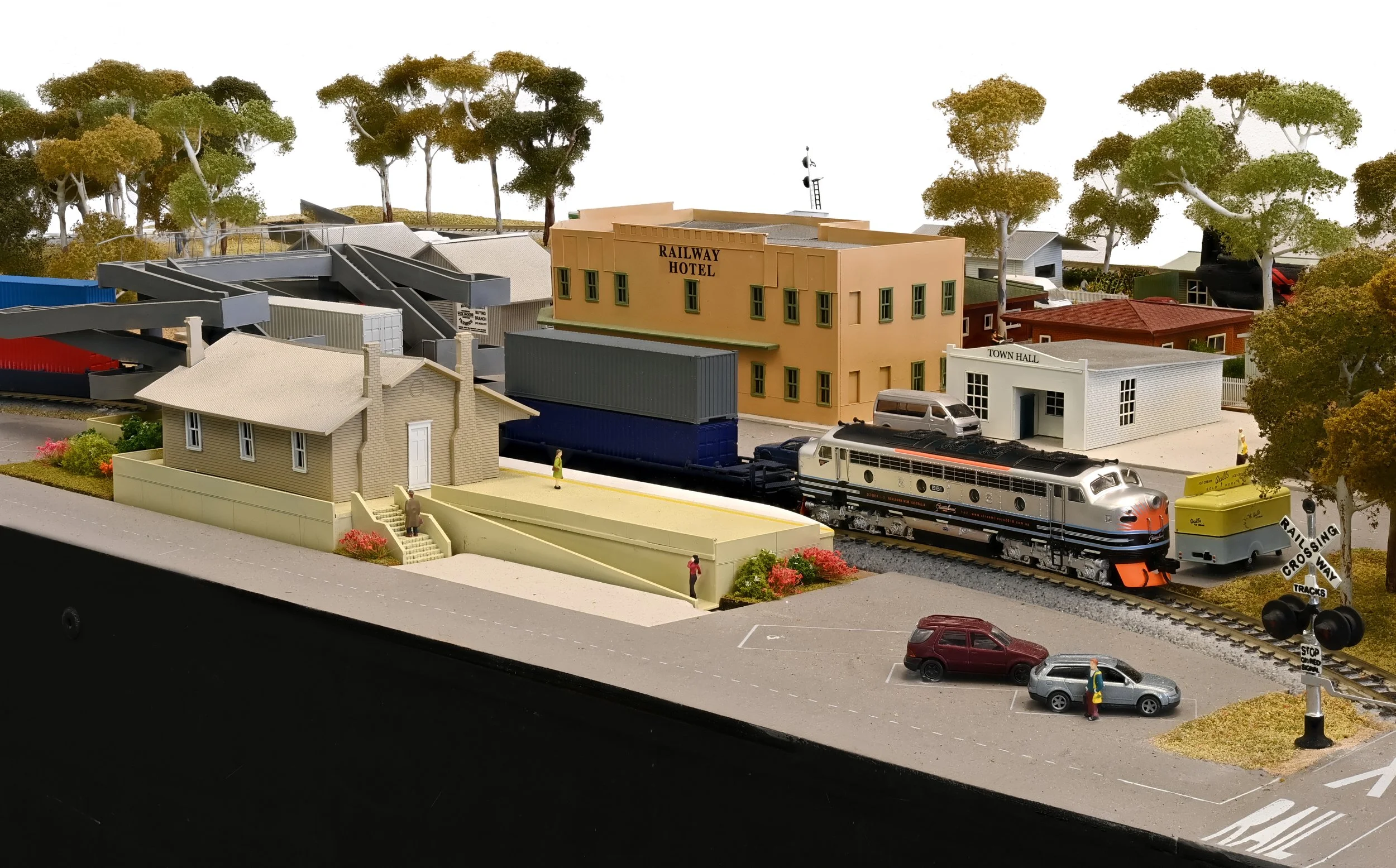
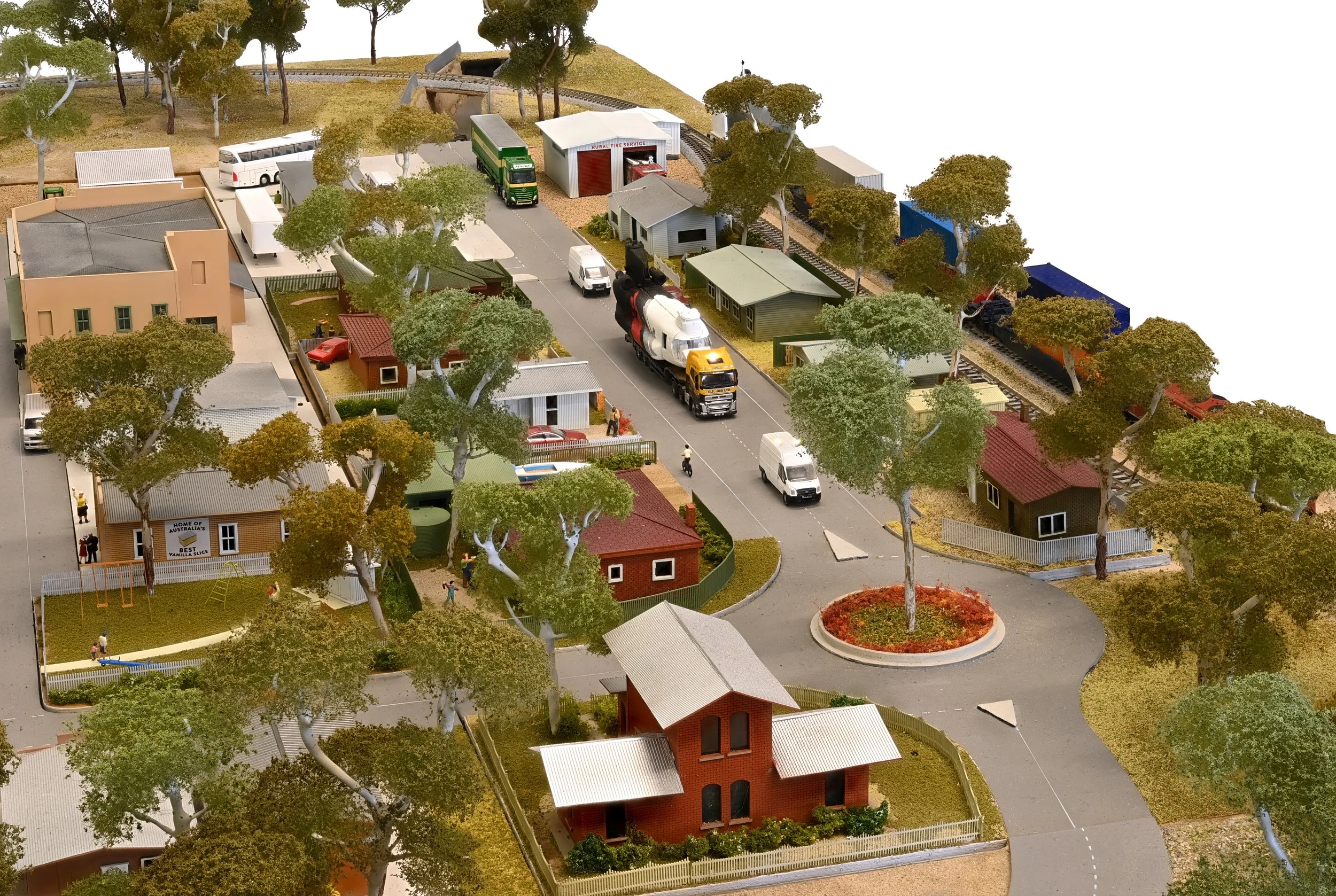
Structures were designed in Adobe Illustrator and laser-cut from black styrene, based on real houses sourced from real estate websites. As the town needed to be generic, the houses are random in style. The pub is loosely based on the Tullamore Hotel, while the station is modelled on Broadford Station circa 1950, using reference material found on https://www.victorianrailways.net
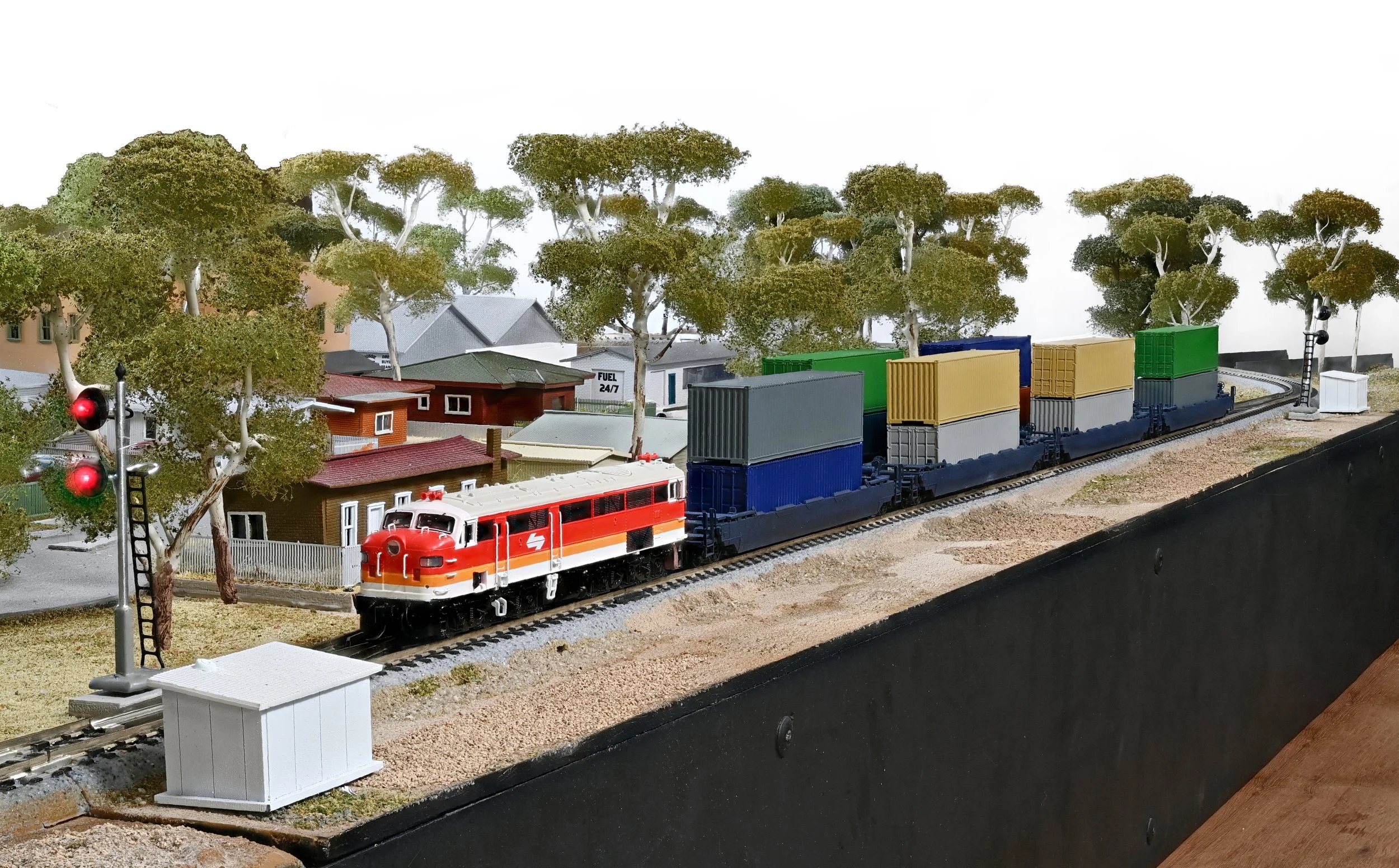
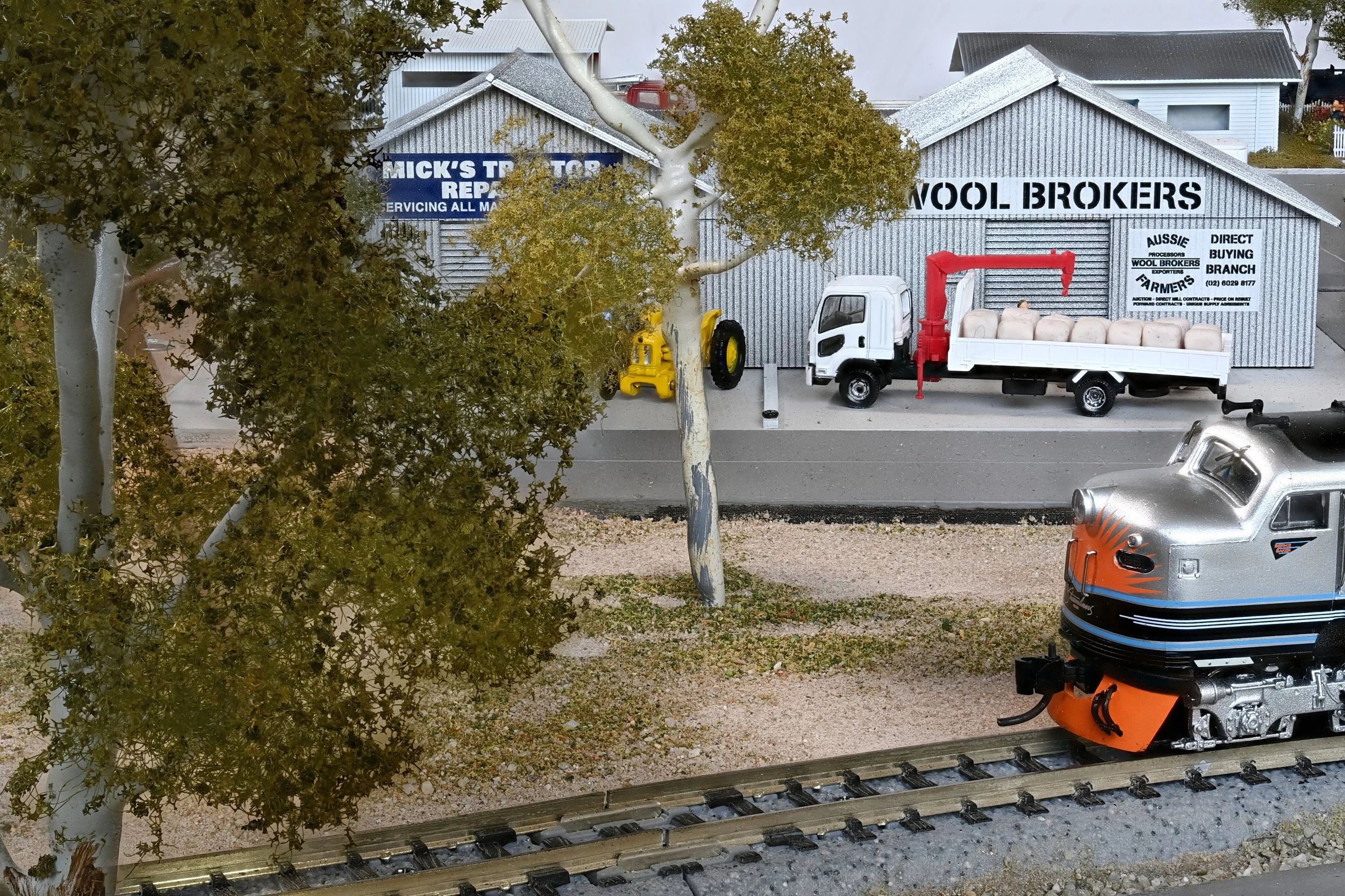
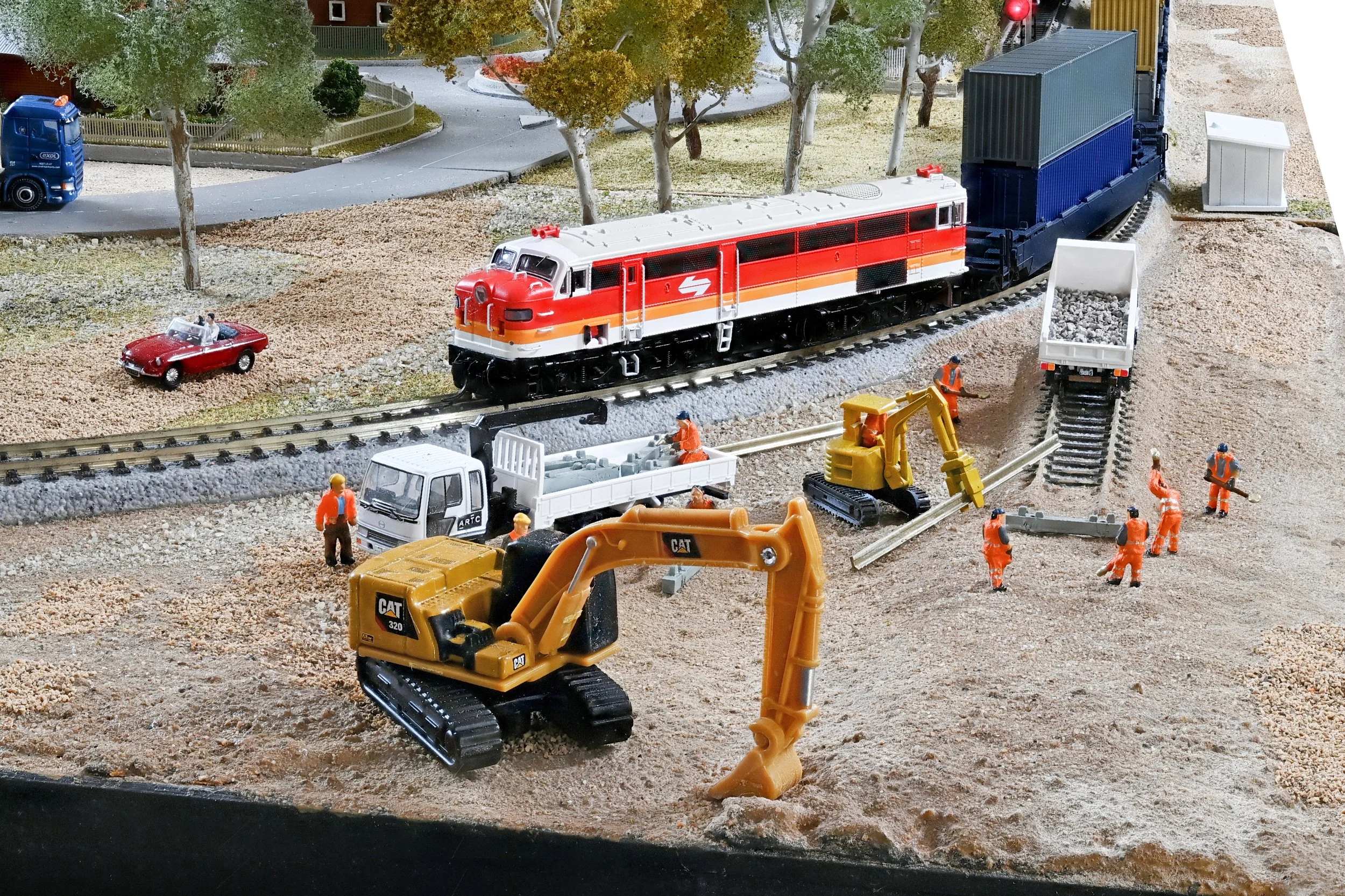
Locomotives used on the layout are from Gopher Models, while the double-stack wagons are Micro-Trains well wagons repainted in SMS Freight Rail Blue.
Signals and level-crossing lights are from Handmade Accessories. The flashing unit, sourced from China via eBay, runs on a 9V DC battery, making it easy to replace and reducing the need for inter-module wiring.
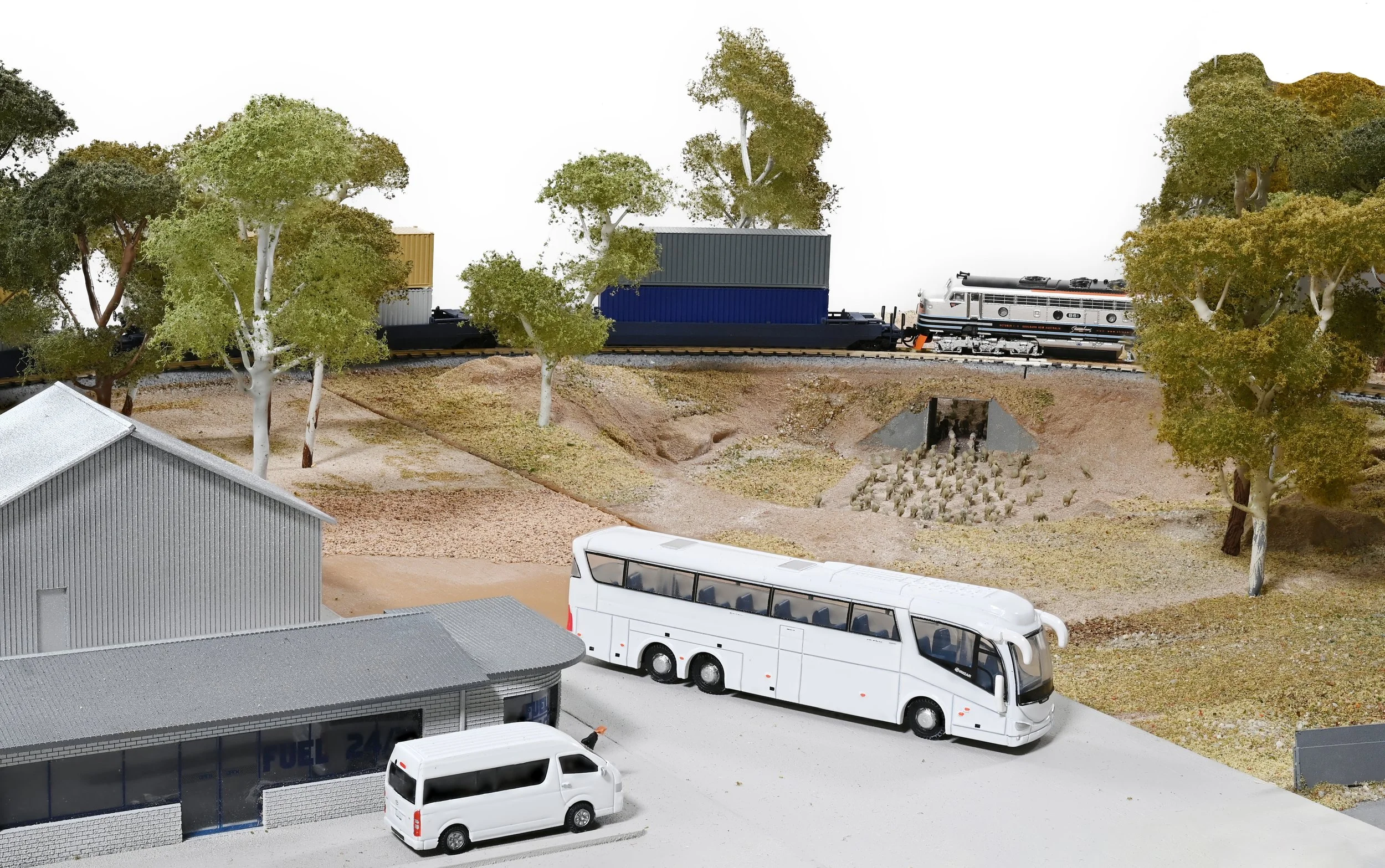
The wide-load escort vehicles are Oxford Miniatures, and the Chinook helicopter is a 1:144 plastic kit originally intended as a military model. Some parts were omitted, and laser-cut masking tape was used to replicate a firefighting colour scheme. Flashing lights were installed in vehicles, wired through the baseboard, and connected to an inexpensive flashing light kit sourced from eBay.
Trees are from Australian Model Trees (Ron Cavanagh). A total of 100 trees were ordered, with most used on the layout. The quality is outstanding, with approximately five varieties of gum trees available.
Fences are custom-made, either laser-cut from 0.5 mm styrene or produced as custom brass etches (.3mm), and painted using SMS paints. Vehicles are a mix of Oxford Miniatures, Busch, and Tomytec. Figures are from Kato, Noch, and Preiser.
The entire project was completed within a two-month timeframe, resulting in many late nights to meet the deadline while balancing full-time work commitments. Despite the tight schedule, the project proved to be a rewarding experience, made possible with the assistance of friends who provided guidance and extra hands when required.