Making the AHWX wagon
After a recent derailment on the North East line, inspiration came from the ballast train that visited the area.
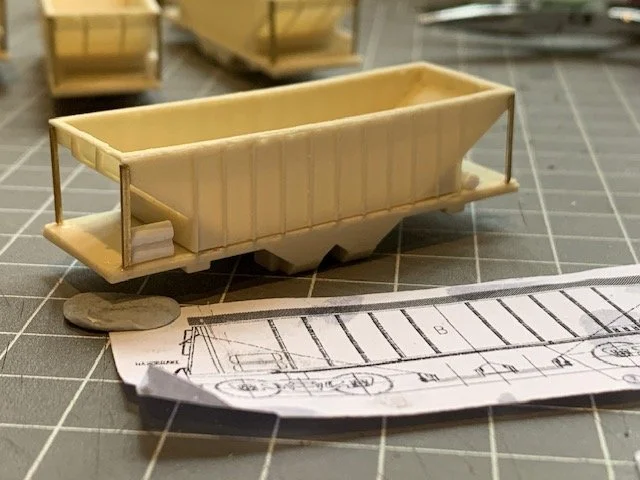
Following a few minutes of online research and discussions with Jamie Winderlich, a diagram for the AHWX wagon was located. This drawing was scaled down in Adobe Illustrator, with shapes created and exported as SVG files for import into TinkerCAD.
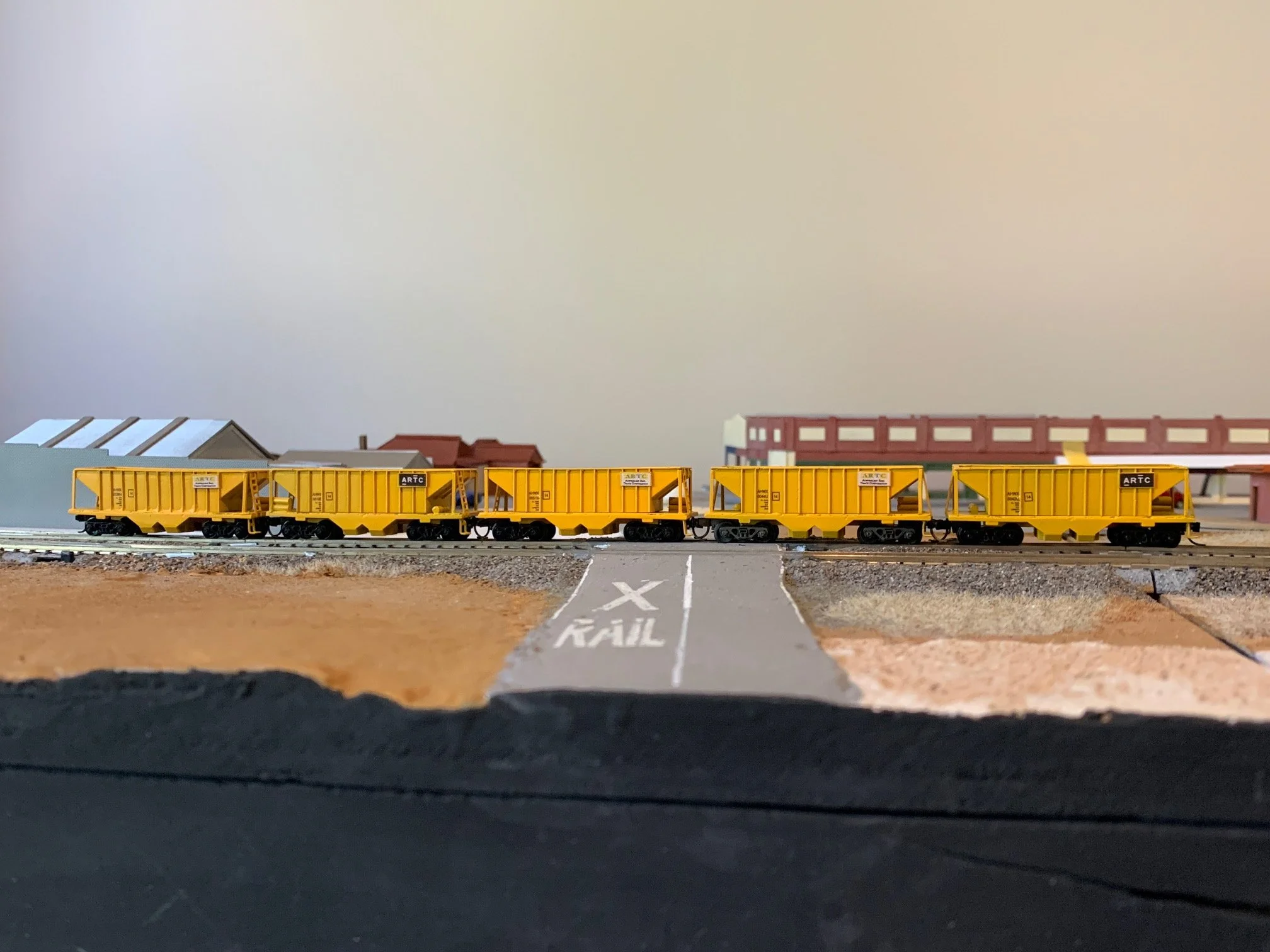
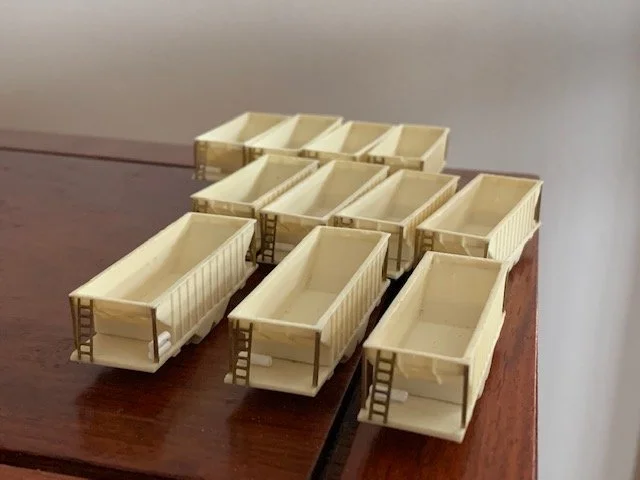
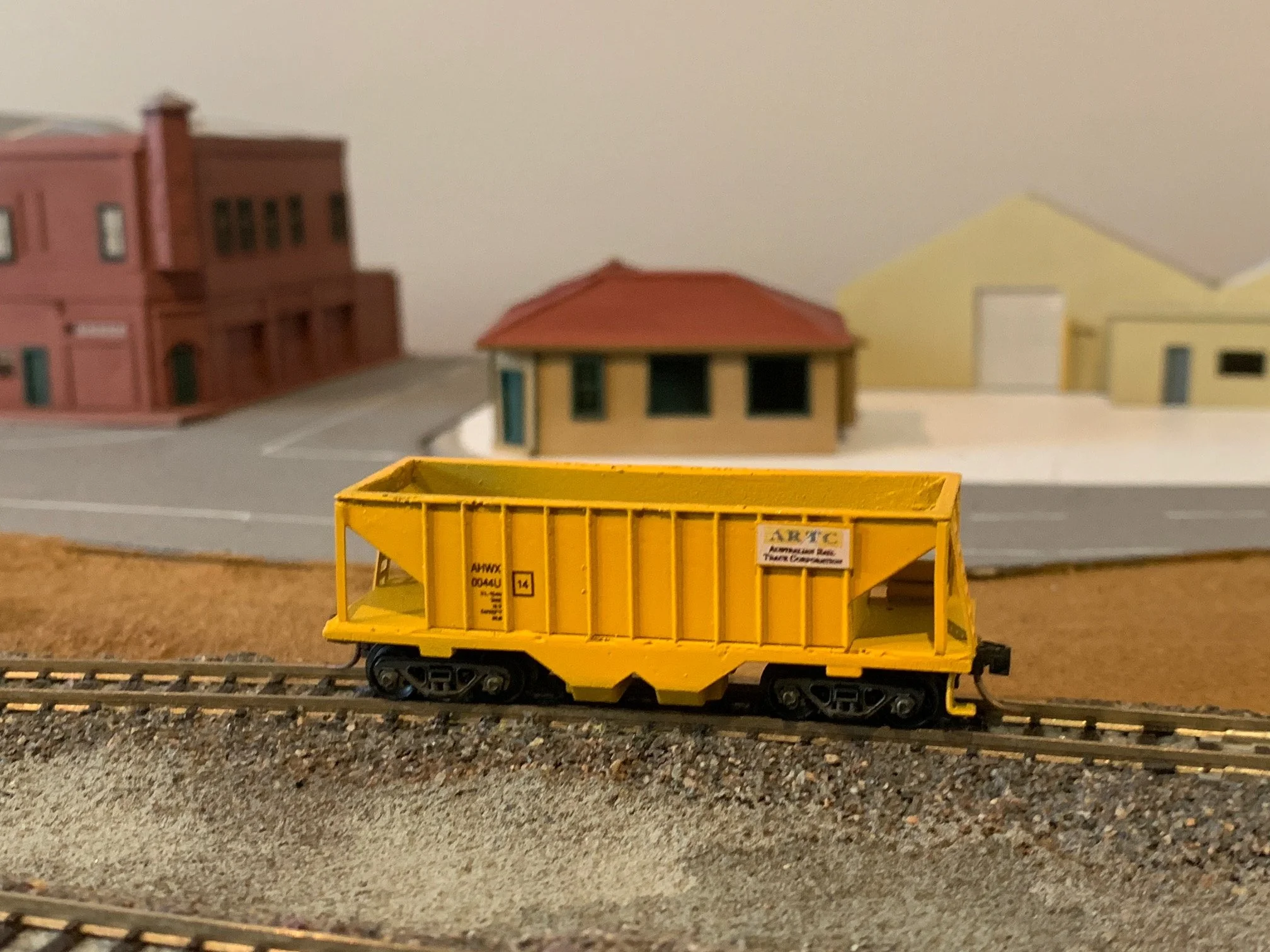
Finished AHWX ballast wagons
The process began by modelling the solid outer shape of the wagon, followed by removing the interior using a smaller, negative version of the same shape. The wagon base was then drawn using the same diagrams, along with measurements taken from other wagons as reference.
After sharing the initial two-part design with Jamie, additional detailing was added. This included panel lines on the ends, a lip along the top edge, and underframe detail adjacent to the bogie locations.
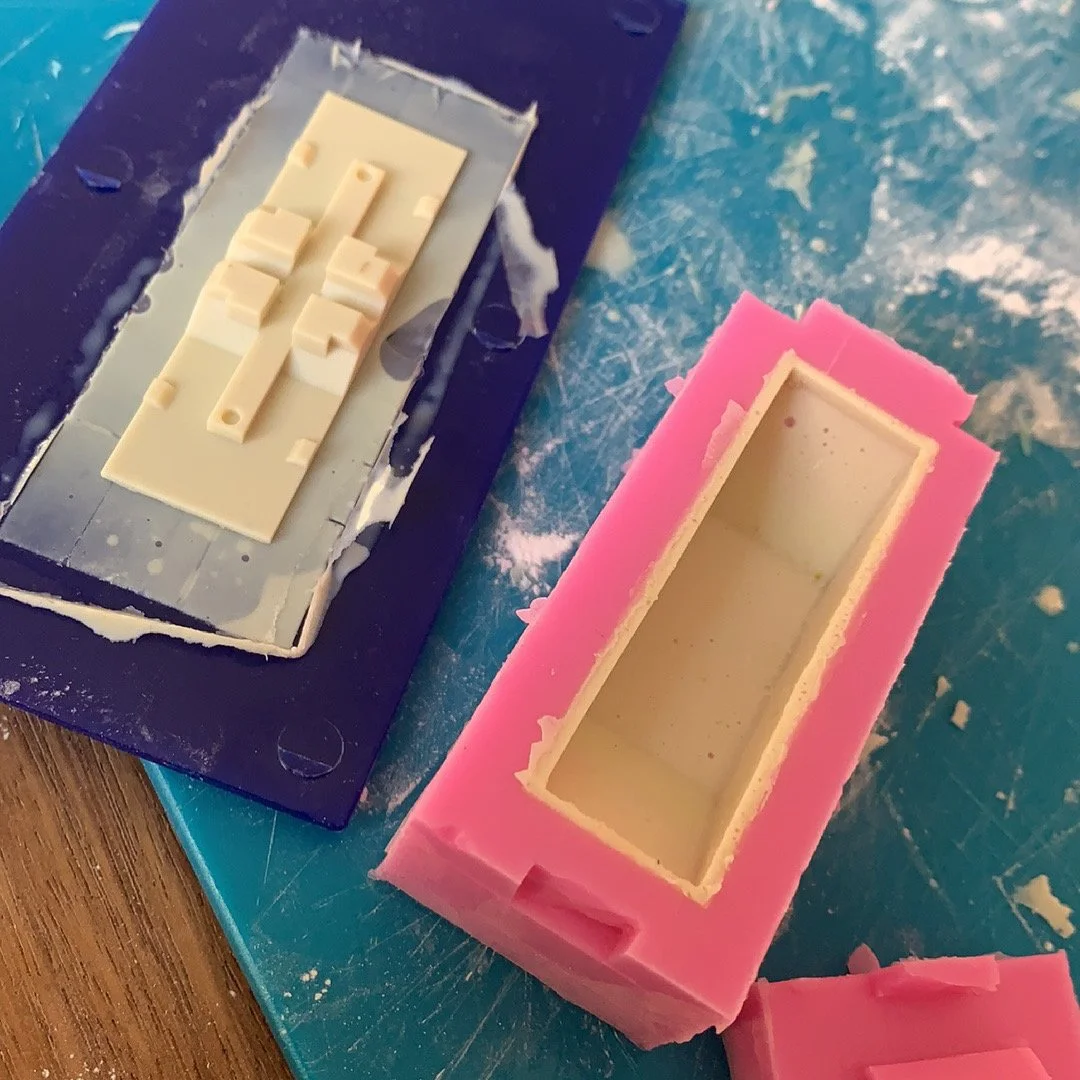
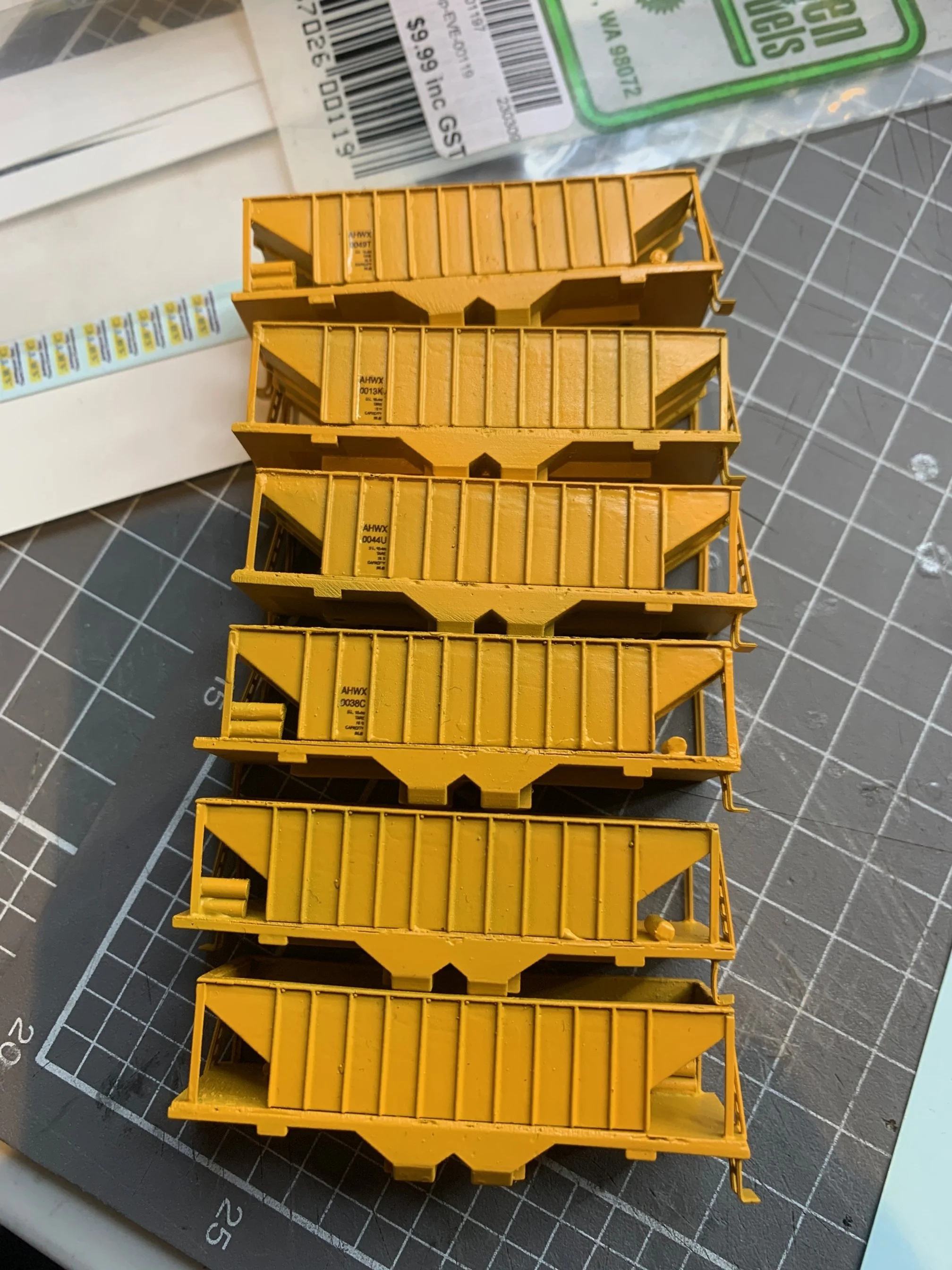
Both parts were then 3D printed via Shapeways and used to create masters for casting. A two-part mould was used for the wagon body, while a standard single-piece mould was sufficient for the base.
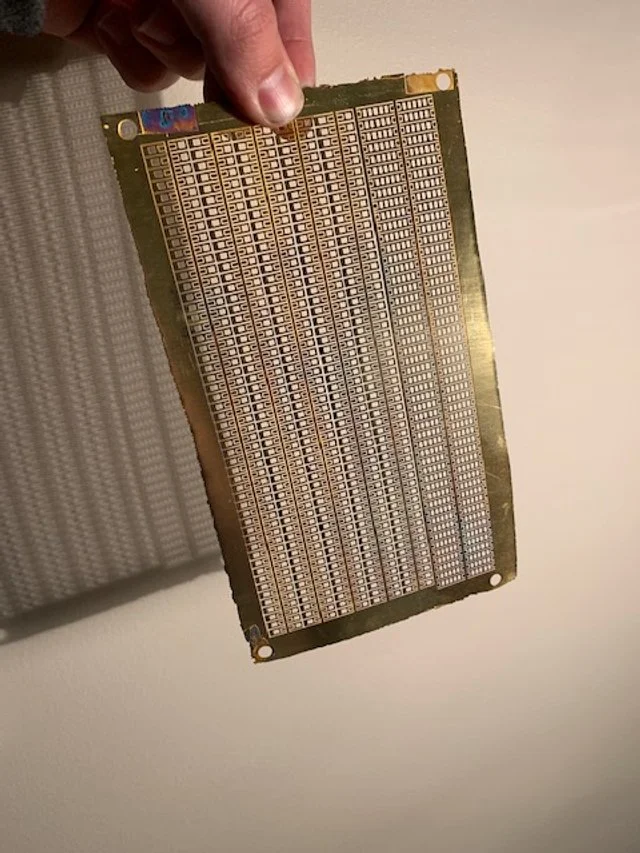
Once multiple castings were produced and glued together, suitable brass angle was sourced to replicate the corner details. 0.79375 mm brass angle (K&S Precision Metals #815001) was selected to closely match the prototype dimensions and fitted to each corner. Brass steps were then drawn and etched for each end of the wagon, before being glued in place along with thin styrene strip signboards for the ARTC branding.
The wagon was painted using SMS Grey Undercoat followed by SMS Trainer Yellow.
Decals were designed in Adobe Illustrator. Printing was handled by Decal Specialists in Melbourne. The steps were painted white using Tamiya Flat White.
The final assembly stage involved fitting bogies—Micro-Trains short extension trucks (1030-10).
A decision has yet to be made regarding the inclusion of a load, so the final task will be to cut styrene shelves that sit inside the top of the wagon. This will allow ballast loads to be added or removed, enabling the train to be displayed in either a loaded or unloaded configuration.