Rob Popovski
Show Notes - Transcript
Please note: This transcript was produced with the help of Otter. Corrections have been made although it is not perfect.
Mark Jesser: Attention, passengers. The next train to arrive on platform one is the Australian N Scale podcast, hosted by Mark Jesser. Today on the podcast, we're sitting down with .
Rob works for Sydney Trains on the Breakdown Gang during the day and models well into the night, we learn about why exhibitions are so important and why gunning in regional New South Wales had to be made in 1:160. Rob has scratch built hundreds of models, and we discuss his process from trackside measuring to sanding his 3D prints with tiny strips of sandpaper, all to get the model ready for casting, I hope you enjoy the first episode of the Australian N Scale podcast, Robbie. Thanks very much for joining us on the podcast.
Rob Popovski: Thanks for having me here, Mark.
Mark Jesser: So, where's home for you, Robbie?
Rob Popovski: Yeah, home for me is in Sydney, Australia. Born and raised in Newtown, and yeah, moved out in in the thing was in the um no 1990s um yeah the dad being a Wog immigrant didn't really like all the new people moving into that um suburb so yeah moved out to Hurstville in Sydney and yeah just started my own family and got married, moved into Revesby and haven't left there since. Oh
Mark Jesser: yeah, and and what's work for you?
Rob Popovski: Work for me at the moment's working for Sydney Trains while working on the Breakdown Gang. We we just do all the emergency work, derailments and incidents on the railway network. It's pretty good.
Mark Jesser: And and how long have you sort of done that for?
Rob Popovski: I've been in Sydney trains for about 15 years and just floated around from being a fetler, also yeah becoming a tamper machine operator and yeah just moving around. Once I get bored or something, I just go on to the next thing. Yeah, just love every facets of working for the railways.
Mark Jesser: Yeah, nice. And and what got you sort of into model trains? Did you have sort of much of the, you know, was your was your dad sort of an influence or like sort of how was the railway sort of started for you?
Rob Popovski: Yeah, yeah, no, but I had no influence. He said, "Stop buying trains. You're wasting your money. Do something with it. So, yeah, no, he he he didn't understand trains and didn't understand the passion of it. So, I mean, once once I could afford it, I I was buying trains, and he just kept on saying, "Don't waste your money on this stuff. Get yourself a house. Do this. Do that, and I wouldn't listen. But yeah, always had passion. No, from the ripe old age, I think I, from what I can remember, I was probably about eight or nine when I first got my train set, and then I think growing up, you know, I was about 15, and then yeah, didn't even want to think about trains, and you know, or thinking about cars, and yeah, stepped away from the train scene for about 15 years.
Mark Jesser: Yeah, right. Yeah. So then, yeah, decided
Rob Popovski: to come back to it and just wanted to see where I'd want to be at. And yeah, there was wasn't much available back then for Australian N scale, but I knew that's where I wanted to be because you had to be more creative with Australian N at the time, because there was, like I said, nothing available. But um, there was a lot for the HO guys. But HO was you could just buy it off the shelf and and put on the track and away you go. But personally, I didn't feel I would have been satisfied doing that. I really wanted to do hands-on and and and actually scratch build my own stuff, and and how can I say um and and size size is a big factor in everything. Like I seen these people with these HO layouts, and yeah, it wasn't something that I wanted to do. Was run, you know, massive. We didn't have the room for a massive layout, like a lot of people do, and yeah, a lot of people don't have that space. But um, I could see that the potential in N Scale of having to run longer trains is what what I really wanted to see, and have. So obviously, N Scale was away.
Mark Jesser: I guess it would have been a bit of a challenge at the start to you know, I want this, but I guess the realization is you've got to make it, don't you?
Rob Popovski: Yeah, yeah. Oh, definitely. Um, I've always sort of been creative, and I've always loved making things. You know, just working with my hands and and trying to see if I can build something. You know, like see something and then try and build it. You know, whether it be out of paper or cardboard or, or whatnot. I mean, I mean, one of the first trains they built was made out of paper, where it drew the actual locomotive and made this little paper cardboard thing, and yeah, loved it. Um, and that sort of inspired me because yeah, just interest in in. In how things work and how to make them, and I guess just being creative, having that creative sense, you know, like
Mark Jesser: how does work influence your modeling?
Rob Popovski: Um, yeah, been been around trains all day. Yeah, you get to look at things and you think, wow, I'd like to see if I can actually make that and have it on my layup, you know, and other people can see it and appreciate it. So, and I think the biggest thing working on the railways is if I ever wanted to build something, I can just walk up to it from measuring tape and actually measure it, so I can scale it in. So there's a big advantage over there on that,
Mark Jesser: that's something that most wouldn't have access to.
Rob Popovski: No, definitely not. But you know, when they see us out there, most most people laugh at me, and all the boys know that I'm trained mad. But and they say robbers robs off with the fairies again. But I don't care. They just you know some of them, some some do come and even help me hold the tape measure, so I can actually measure this wagon and crawl underneath it, take photos of the under frame and that, and I'm sitting there measuring all the code boards and that, so I can scale them in when I'm doing the decals for the model. Yeah,
Mark Jesser: wow.
Rob Popovski: But yeah, even to you know, what influences me on on the railways as well is like if if I've worked on a certain track machine or or a crane and that I'd like to try and replicate that, so see if I can have it in in N Scale because it just yeah it's just a reminder.
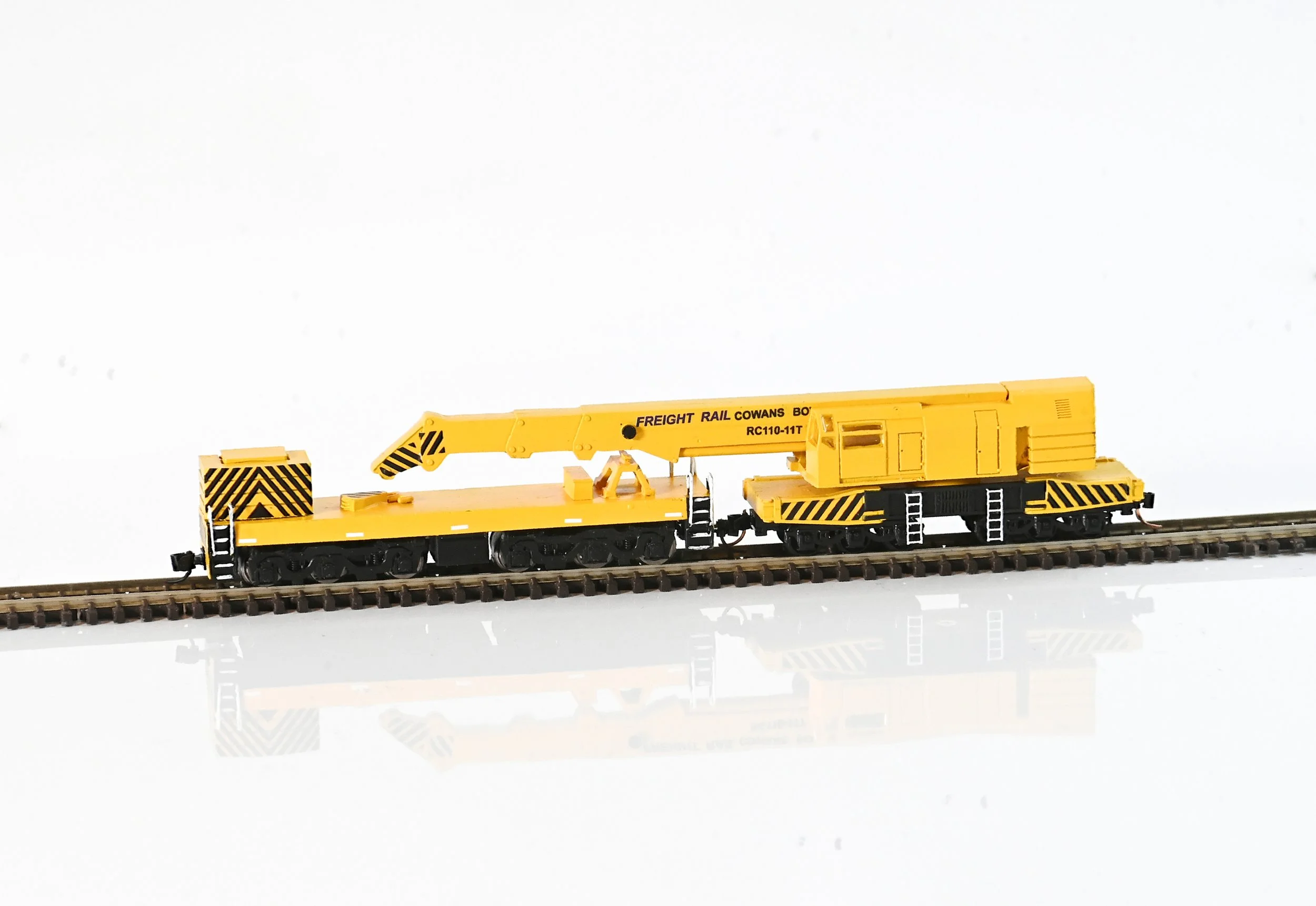
Mark Jesser: I think the Wangaratta convention a couple of years back now you had a little well. You had a model of a breakdown crane in the modeling competition. From memory, was that sort of one that you'd sort of had experience with through work?
Rob Popovski: Yeah, not necessarily. I'd never worked on that crane, but the significance was the the gang that I'm working with, the Breakdown gang, that was the last crane that was ever on the railways. Yeah, the story, the story behind that crane was is they were doing a derailment at Chester Hill, and it was a derailed CLP that was in the dirt, and these guys got the crane, and and people were worried about him because I don't think safety was a big concern for him, and they were putting away the timbers after they finished the job because they were swinging the crane around. It went past its vertical limit, and they actually rolled the whole crane.
Mark Jesser: Wow, wow!
Rob Popovski: So I think that was the last time Sydney Train says we we can't give these you know donkeys licenses to drive these cranes, so they shelved it and it went out to
Mark Jesser: Wow! Wow!
Rob Popovski: Well, they didn't want to repair
Mark Jesser: it.
Rob Popovski: That was the significance, and I thought, yeah, I think it'd be a good token to you know recreate that crane for myself personally.
Mark Jesser: Yeah, nice. Yeah, and for those who want to see that crane, there'll be a picture on nscale.au where you'll be able to have a bit of a look at that one. Robbie, in terms of your your sort of hands-on skills and and your modeling skills. Where do you think they come from?
Rob Popovski: Yeah, I was I was a ratbag of a kid at school, but always had the creative sense where I'd always like to work my hands and I like building stuff. So I think that really helped. I think most of it. My parents thought they were just giving me too much sugar, but it was ADHD that played a big part of it, and that sort of model always helped me focus. And problem with being ADHD, you do focus a lot more than what other people would on certain things, and you get carried away.
Mark Jesser: Yeah, when you first started modeling, was there someone that you sort of were influenced by, or was there someone in a club or anything that sort of helped you sort of guide you a bit? How did you sort of find, you know, how did you find some of the processes?
Rob Popovski: Oh, look, I found it hard. I I thought modeling was a self. How can you put it? I thought it was something you do for yourself by yourself. You just go to the shop, buy these tracks and buy these trains and put them together. Ask them a few questions. I didn't. I didn't actually know that there were other people out there that that actually teach modeling and and there's didn't there were exhibitions. I had no idea that they even existed, but I did get influenced by this one person. Her name was Robyn Taylor, and she held actual classes on how to scratch build and make models. And she was also into N Scale.
Mark Jesser: Yeah, wow.
Rob Popovski: So I I do remember that vaguely. And she she she'd hold a class. I think it was Tuesday nights, and we'd all rock up.
Mark Jesser: And was that was that in person or was that in online or
Rob Popovski: yeah no she used to own a shop here in Kogarah in Sydney, and yeah she just used to teach classes and she'd have a group of six and and she'd show everybody how to cut styrene, how to glue styrene, and we we made an actual our first wagon. I can't remember what his code was, but
Mark Jesser: yeah, I guess we don't really see that though these days, do we? Like, it'd be almost unheard of to have a have a class sort of like that these days. Would it fair to say? Oh,
Rob Popovski: definitely fair to say. I mean, there are clinics like when we go to, as you know, when we go to a convention and people sit down and hold clinics, but yeah, it's it's an old art form, and I think people are getting spoilt these days by what what you can buy buying the shops ready to run, so they lose that sense of how to build something. But you know, it's it's not a hard thing to do when somebody actually shows you how to do it. You know, it's always scary at first, and people are always too. How can I say? They stand off because they're worried. I don't know. Am I using the right glue? Do I know how to cut this? Do I do the? And and they get scared from the whole thing. But when actually somebody shows you and teaches you how to how to cut something, how to glue something, it doesn't become such a scary thing. And yeah, at the end of the day, you're going to create a model that you're going to be proud of.
Mark Jesser: Like obviously, YouTube has played a big part in in my modeling personally, and and obviously, you know, some fantastic modelers on there showing their processes. Oh, YouTube
Rob Popovski: is a wonderful tool. You know, there's so many guys on there, and there's so much stuff that I still learn to this day from YouTube. But like in the old days, we didn't have none of that. In the old days, yeah, like like I said, I I had no idea clubs existed. I got married and wanted to start my own train set, and like I said, I I found there was an actual Model Railway Club near my area, which is the Georges River Model Railway Club, and I didn't know what these people do, but you know I went there and yeah, all nervous and whatnot, and you go ask somebody how do I build a tree, how do I put track down? How do I do this? And they'd all give you information. Now, whether you took their information on board or not, thinking no, I think I can do it a better way, but yet you actually go home with the understanding more of what you had to do and how you can do it than just going home and nailing track down and hoping for the best, they actually, they actually gave you a guide on on how to do it better, and then as you keep practicing that, you start getting your you start to do it your own way, and then you hopefully teach other people on how to do that.
Mark Jesser: And your first sort of attempt, your your first layout. What was that?
Rob Popovski: Yeah, my first layout was just a. I just thought it was like a typical American layout. Had to make them run around, go up and down a hill, and yeah that that actual layout ended up in Mount Eye Tip, along with the other 15 attempts,
Mark Jesser: wow!
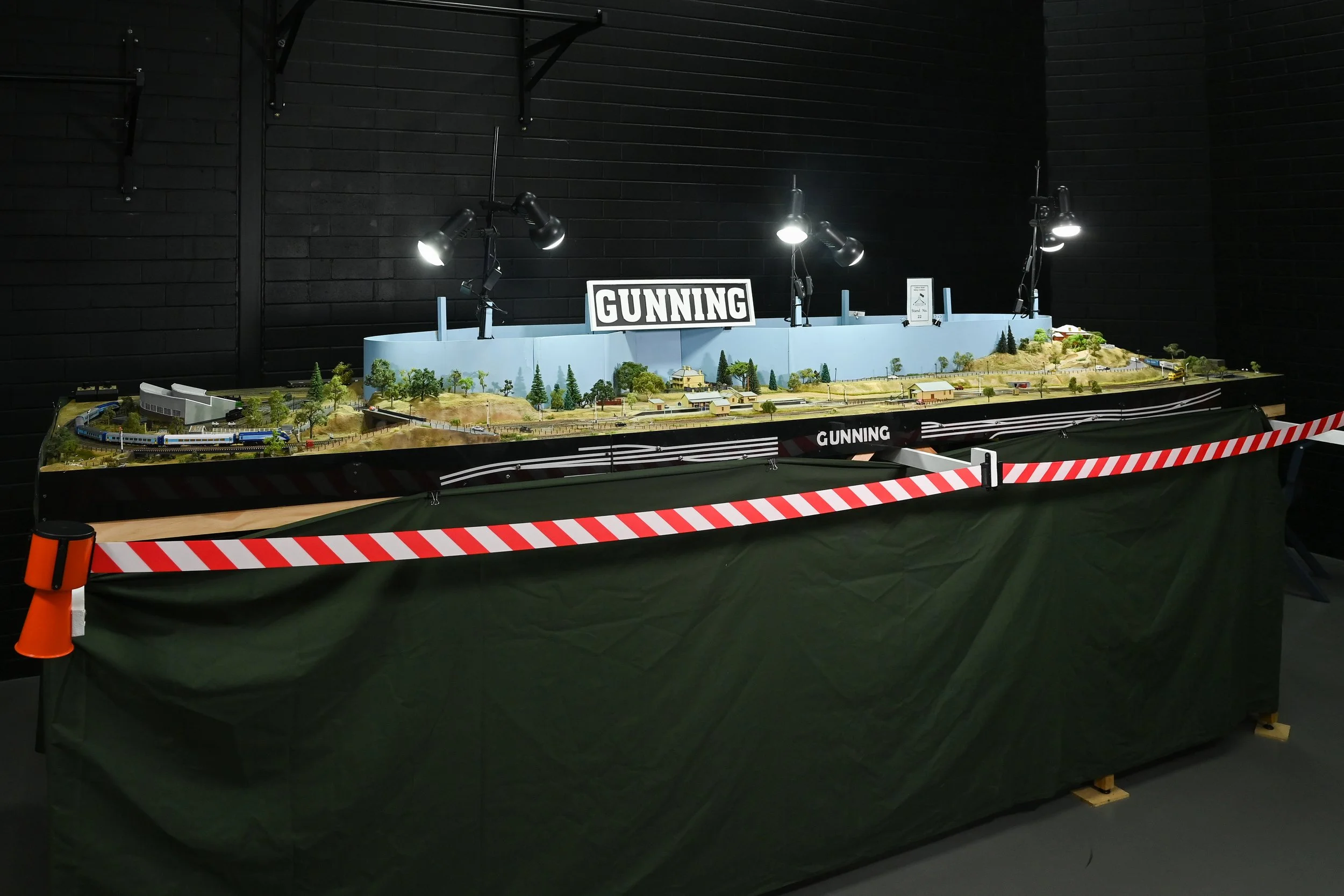
Rob Popovski: But you know, yeah, you you learn from each one. You know, it's you're not you're not going to hit the point on your first layer. You're not going to hit the point on your second layer. And and even now, I've made a few layouts. I'm still not 100% on them, but you just you're getting better with each one you do. Like one of my one of my how can I say one of my layouts that I really enjoy the most at the moment is Gunning, which which I did build a few years ago. It's probably about could be make 1012 years ago. I mean, we we still run that layout today with all the boys, you know, and we just go out and have some fun, take it to shows and and and and it still operates the same as when I had a brand new, you know, it's about 12 years old now.
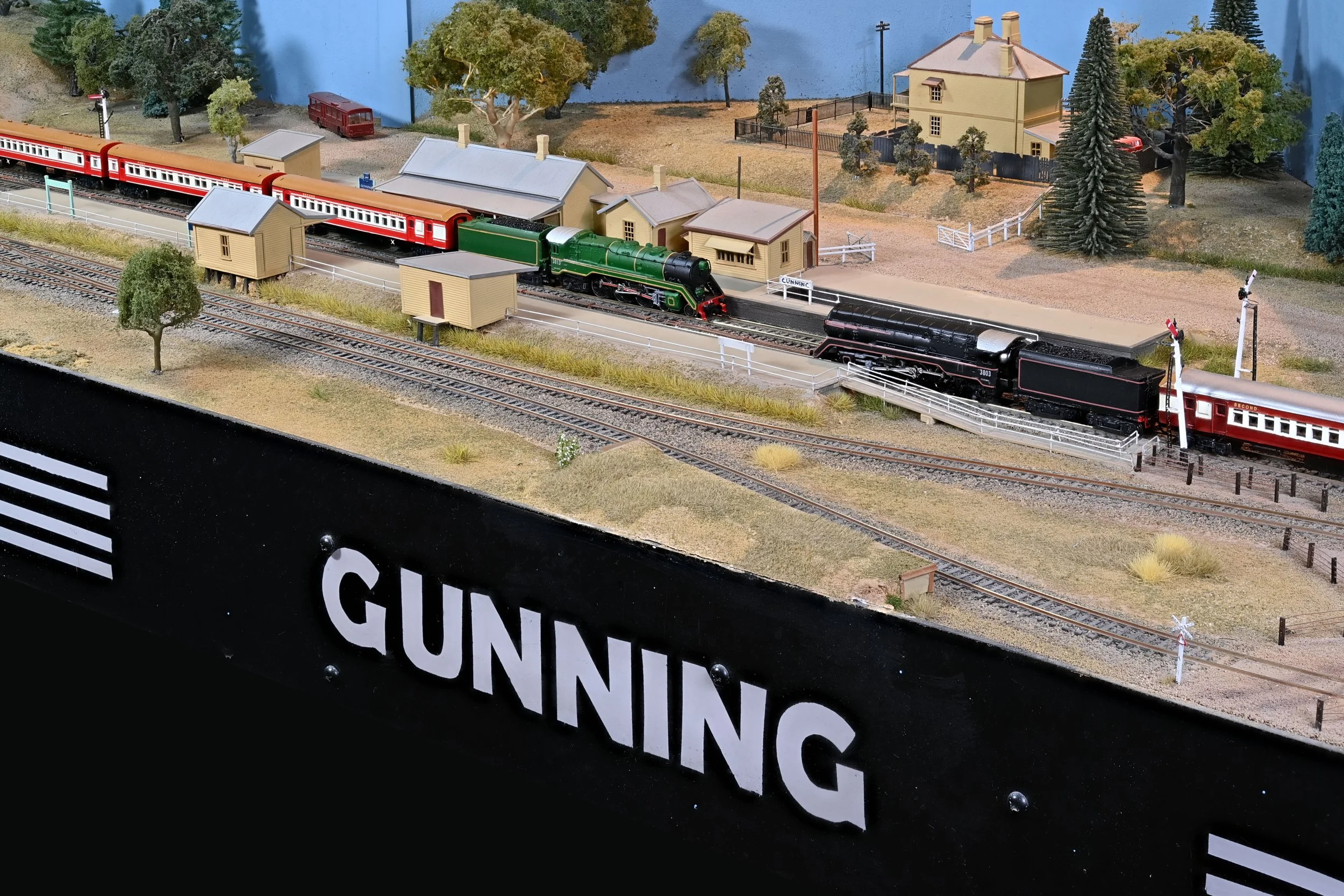
Gunning, NSW.
Mark Jesser: Yeah, wow, wow, and it's it's obviously stood up for that time, you know. It's it's
Rob Popovski: it's got battle scars, yeah, yeah. It's it's definitely it's definitely um seen better days, but you know you just sort of dust it off and and and you fix it up, you know, just dress it up.
Mark Jesser: And and why gunning? What what why did you sort of decide gunning was the one you wanted to sort of make your first,
Rob Popovski: um, yeah. The attachment between gunning was-I mean, it's not all model trains and cars for me. It's also going out with your friends, train spotting, and and gunning was always one of the hot spots for us. Like it was just, it was just where the station was located. We'd sleep. Overnight, you know, a couple of boys go down the pub, have a feed, come back, you know. The station sits a little bit lower, and to your right and your left, you could you can actually see the trains coming around the mountains on both sides. The station wasn't overly too big, simple buildings that were buildings and structures were on there, and it had double main lines, which is what I always expect for an exhibition layout, especially if you're going to not just show it for yourself and you're going to run it with your friends. You want to have enough. How can I say? You want to have enough roads there that you and your mates can enjoy.
Mark Jesser: How big is Gunning?
Rob Popovski: Gunning's probably about four meters by one and a half meters, but it is modular where it comes comes apart in bits, so we can transport it. There's not much to it, you know. Put it together, plug it in, and and hopefully it runs like.
Mark Jesser: And DC or DCC?
Rob Popovski: Yeah, no, it's um DC to convert it to DCC now would be a little bit tricky, purely because it's just it's a worrying worrying aspect when when you when when you got points and you want to electrofrog points but you got to run in DC, it's wired up differently, but if to convert it to go to DCC, it makes it a little bit more trickier. So I haven't really done it, but these days Pico have sort of come to the party on that, where they actually make this uni frog point, and that unifrog point's amazing. So you can have a layer and run a DC and DCC. It just makes the wiring a whole lot easier than what it is now or back then.
Mark Jesser: And and DCC is obviously phenomenal, and it's amazing tech. Have you got a preference on which one you'd sort of normally? You know, if you buy a new loco, are you buying DC or you buying DC? So you got a preference?
Rob Popovski: Yeah, just to the way I look at things is what I'm going to use it for. Like if I'm going to be running, say, New South Wales, and a lot of my New South Wales stock is DC. DC, so going DCC on that it cost me a packet and wouldn't be feasible for me. But I also model Victorian as well, which I really enjoy. But because when I started thinking about doing Victorian, purely because there were things out in New South Wales, and I really wanted to go into the Victorian side of things because, yeah, it's amazing how much you you learn. But I did say that when I do Victorian, because a lot of Victoria's single line running, I DCC was a no brainer. So yeah, all my Victorian stuff is DCC, and when I buy, that's how I look at it. If I'm buying New South Wales, it's all going to be DC because it's just all our majority of our layouts are New South Wales based. So and but we are we are coming into the you know 21st century and yeah we are starting to DCC some of these layouts the older layouts so that yeah, the new new guys that come in, they can have a run on it because a lot of them prefer DCC, and yeah, it is it is a much superior product to have, easier, better to run. You can run more trains, and you can run them in any direction you want.
Mark Jesser: When you're looking at locations to model, you've done a few layouts now. What what are the things that you sort of consider when you choose somewhere to model?
Rob Popovski: Yeah, what the intended purpose of it is, you know, like if it's going to be a layout that you're going to run with your friends, you want to make sure that you can accommodate for them. You want to make sure that you got enough roads. You want to make sure that I mean, when I mean roads, I mean actual tracks. So, you know, you just can't have one track and then have four people trying to operate trains on that one track. It's going to be chaotic. Like I, I personally think like when you when you're looking at doing a layout, is is who you're building it for. You know, if you're going to build it for yourself, you can just run single mainline trains because you're operating it yourself. You can probably have another person with you if you want, but when you're building a layout for, say, four people, you know, you want to make sure you've got enough roads in the fiddlyards so they can put their trains on, so they can run them. A
Mark Jesser: lot of people may have seen you out at exhibitions and shows with gunning and and a few other layouts that the guys have now sort of got and run fairly often. How important are exhibitions?
Rob Popovski: In in saying that, exhibitions are are very important, especially to us, because it's an escape. Like we all do nine to five jobs, and we all we all have a passion for model railways, and and and they're good because we come together as a group, and and we we enjoy being with each other, and we we run trains, and we and and we try and promote what we do. That's the big. That's the key in exhibitions. Like if somebody comes up and has it, there is no stupid questions you can ask in model railways, and and we're always willing to help, you know, because if you start driving people away, they're going to come in, they're going to want to, they they're going to be excited about trains, and if people brush them off, they're not going to return, and they're not going to the hobby's not going to grow. It's just going to stay situ, but you know, and and just ask people questions. You know, like how'd you do this? How'd you do that? Oh, why'd you do it like this? And if you can get one person to say that's that's great, and he'll start off in that hobby. You know what I mean? You'll give him a good start. The exhibition scene's always good because the camaraderie-you get to know all the people, you know-and and guys come up and have a chat, you know, and it's great. It's a great feeling, but um,
Mark Jesser: and for you, obviously, it's big social part too. You know, there's like you said before, you get to catch up with your mates and you get to go places and and check out other stations and different clubs and all that sort of thing. Oh
Rob Popovski: yeah, yeah. It's not just the exhibition. It's actual journey. You know, like you all psych yourselves up. You know, the week prior to the exhibition, everyone's just calling each other and texting, and you know, oh yeah, we're going to go here. We're going to do this. We're going to do that. You know, we're going to train spot. Maybe hit the pubs a few times, yeah. Have
Mark Jesser: a few beers, or Captain Morgan's.
Rob Popovski: Have a few Captain Morgans as usual, but um, it's just yeah, being being part of something and being you know, like I said, and you you're with your mates, and you you're just enjoying the moment. How can I say you know like you get all soaked up?
Mark Jesser: Yeah, I guess when people are looking at Gunning and and and other layouts that you've built, people wouldn't realise how much of that scratch built. You know, it's not out of a kit. You know, it's not. You know, it's not something they can just buy off the shelf. You know, even like your rolling stock, for example, is a lot of that is all scratch built and and made. Talk us through sort of the process.
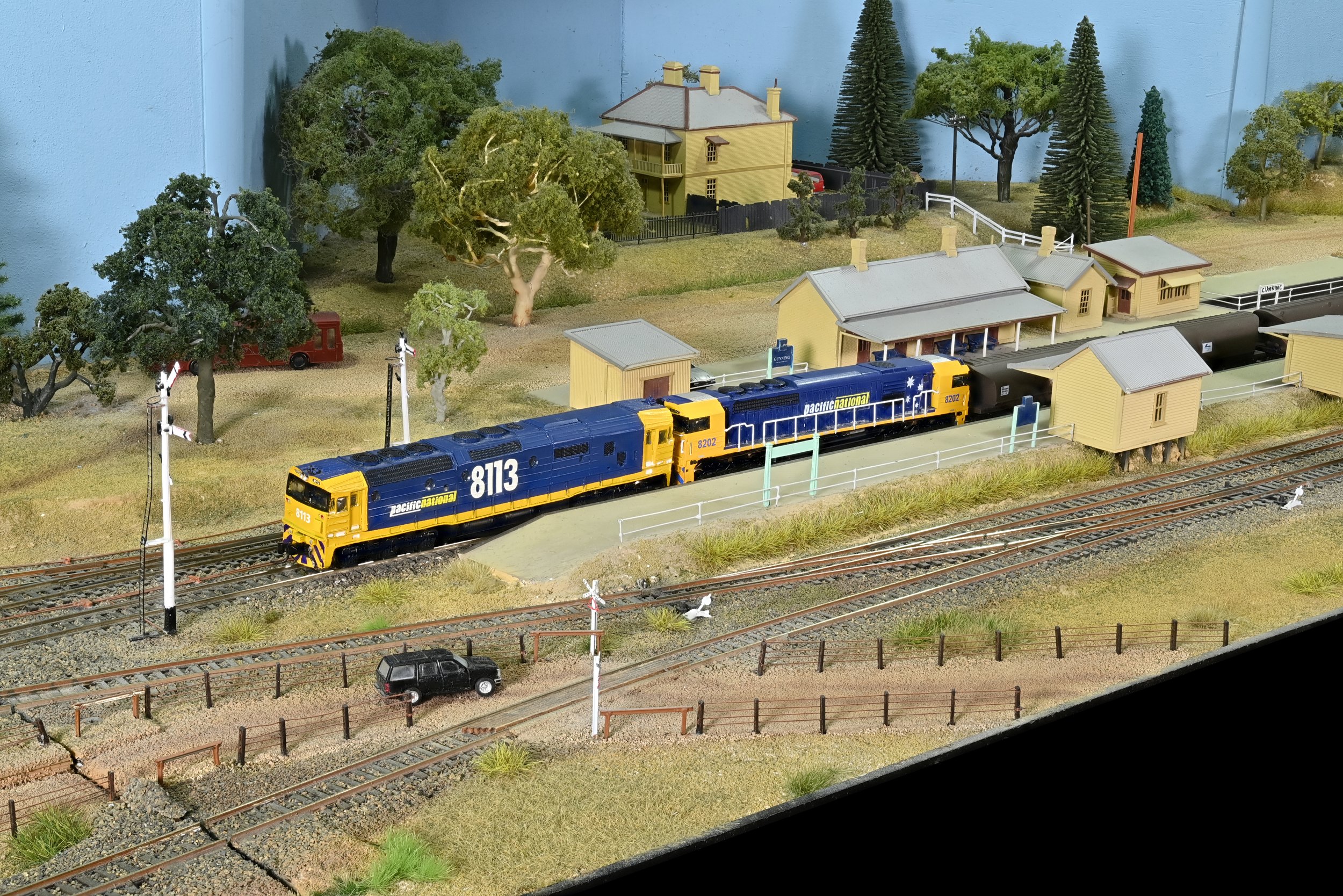
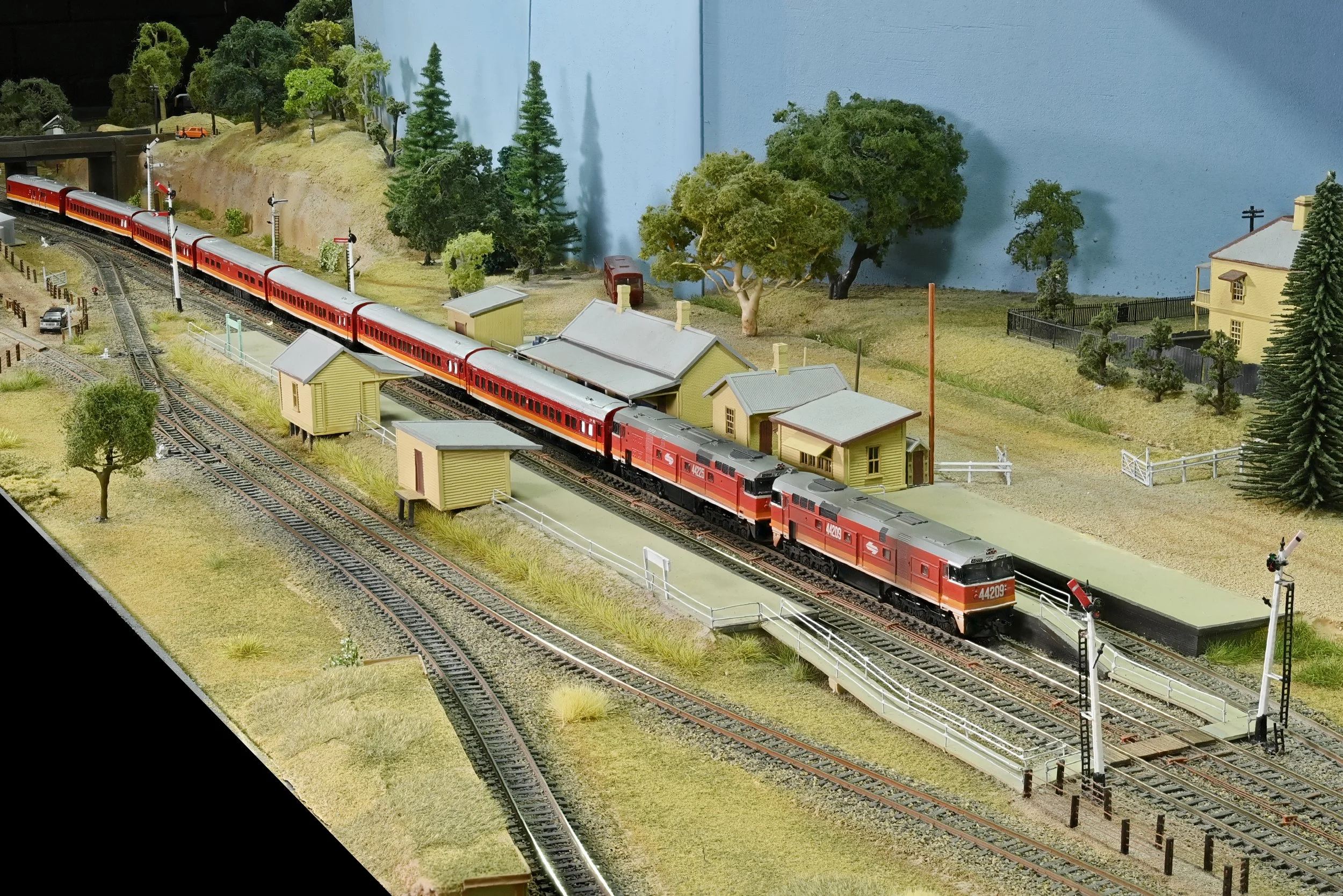
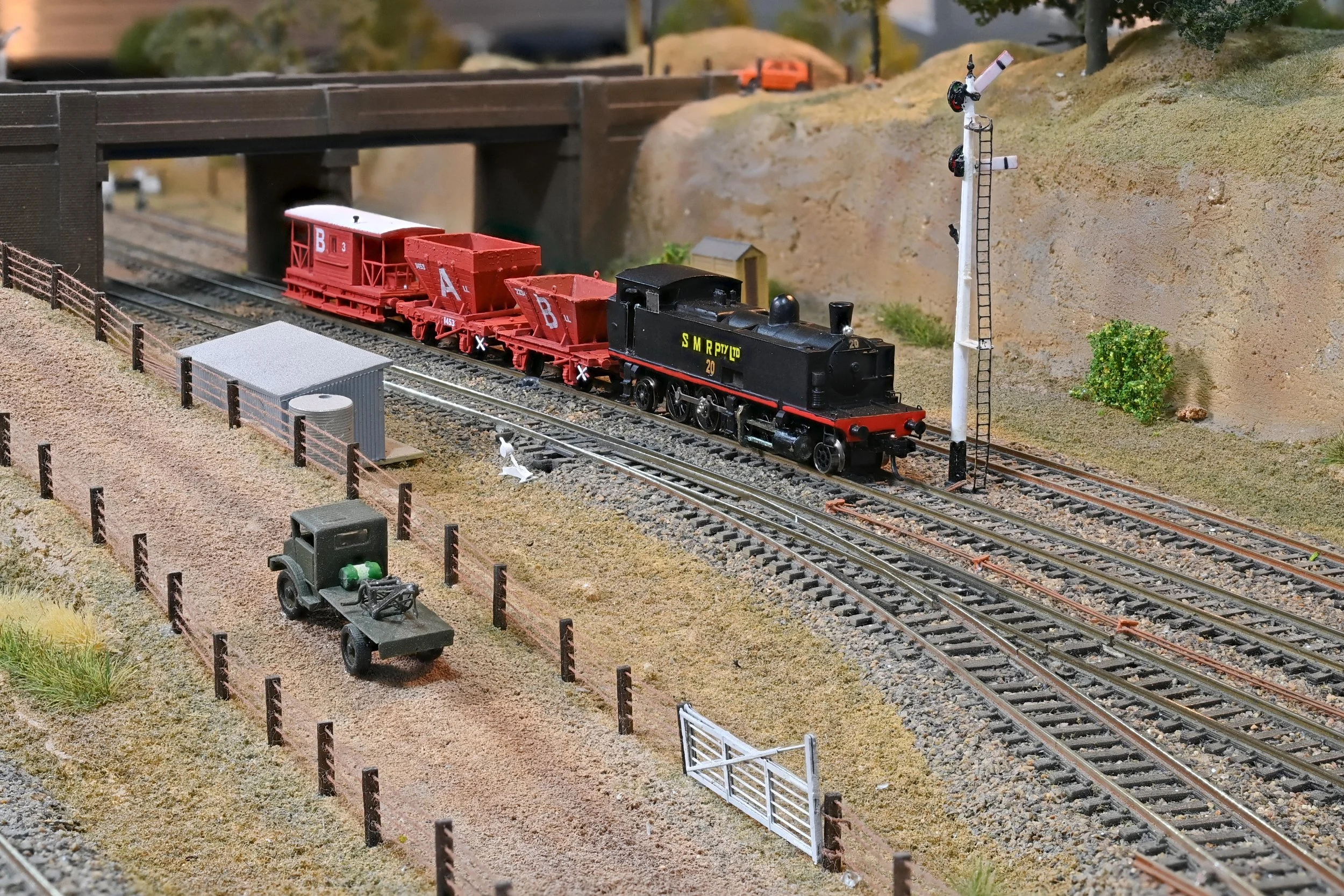
Rob Popovski: Um, yeah, like like like we said, when you when you're modeling Australian, and this is not even just in end scale; it's also in all the other scales as well. If you're going to model a particular place, there's no buildings you can just buy off the shelf and and and put them on, or or if you want certain rolling stock or locos, because sometimes none of that's available, and especially in end scale, it's really hard to find. So the the process in it is is like yeah, you you you go out, you do all your measurements, you know. Especially if it's a place that that's accessible, and and and this goes back to the the other question: why gunning? Because gunning has not changed since it was first built back in 1884, and most of the structures are still there, which made it a lot easier for me to go out and replicate that.
Mark Jesser: Yeah.
Rob Popovski: So yeah, the the structures are there. You can measure them up. You can scale them in, and they and they're still there today. So
Mark Jesser: some of those buildings you've done obviously out of styrene by by hand, and then there's other things you've done with a 3d printer. What's what's sort of the difference for you? Like, how do you pick what method you're sort of going to use to either make a building or make a wagon or whatever? How do you pick? Is it scratch built with styrene, or you are you sort of drawing it 3d? How do you sort of pick what method to use?
Rob Popovski: It's really hard to say because the method I used back when back when gunning was getting built, 3d was really new, like 3d printing, like it was unheard of, and there's laser cutters these days as well, you know. But yeah, you you just use what you had at the time. When I when I did gunning, I mean, I knew I could do some scratch building, so, and that was going to be the easiest way for me to do it was to cut it out of styrene. 3d was very new, and and no one knew the programs and software, and I had no idea how to use it. You know, I've seen people on like professional architects and not they weren't modelers. They were like engineers, and that's what I thought that tool was. It was 3d was made for engineers, so I thought there was no chance I'd ever learn this. But um, you had you had other sources like Corel Draw, which was doing 2d 2d drawings, and you can get them. Cut or how can I say etched in brass, and then you fold the brass up and put it together. I mean that was another method of making models, but your skill levels have got to be different for that.
Mark Jesser: And how how did you learn to 3d draw? Obviously, a lot of a lot of your rolling stock starts as a 3d master. Where did you sort of learn those skills?
Rob Popovski: I had an idea, just talking to the engineers down when I, because I worked in Telstra for a little for a little bit. They showed me a little bit of their programming because they had to use it to to make circuits and all this and and make cabinets and whatnot. And they showed me their 3d drawings, and I thought, how do I learn this? You know, because I could use it in my model railways somehow. But
Mark Jesser: was that like a night course for you, or was that just sort of self taught by the internet? Or
Rob Popovski: yeah, again, internet didn't have much on self taught how to make Colin Bolin. He he was also very interested in 3d drawing, and I think what really the big drive in that was me and him. We were trying to challenge each other, so we're going to see who was the first one to get a 3d drawing done and who could be the first one to get it printed? And we had no idea where to take them to get printed because we just we don't know. So you know we're just googling away, or was it even Google back then? We're just having a look on the computer, which was I don't AOL online or whatever it was, and we found out there was a company in in Sydney, which is in St. Peter's, and they actually had 3d resin printers, and they do this sort of work. I mean, it wasn't a cheap thing, and and we'd be drawing up whatever we could draw up, you know, and we we just didn't know what we're going to expect. Yeah, I think I think I got in there first, and sent sent a model away to get printed, and when it came back, it was like amazing. Like it's something that if you tried to scratch build, you couldn't get the corners that sharp and straight. You know, where is in the 3d world? Yeah, you could have all this, but you had to also think. Well, I've got to replicate this model. So how do I do that? Is when that's when casting comes along, where we actually take a model, take take a rubber out of it, make a mold, and then duplicate it as many times as we could. And that was another process we had to learn, which was in itself quite difficult.
Mark Jesser: Very much a manufacturing sort of process, isn't it? Like, what what preparation do you have to do to that 3d master that you sort of got from the from the printer before you could then go and cast it?
Rob Popovski: Yeah, there's definitely a process involved in that because you can't just draw a wagon and say, "Yeah, I'm going to cast it. Typically, because when you put it into rubber, you got to make sure how you're going to get this thing out of rubber and how are you going to cast it. So you've got to actually dissect this model in a way that you know that you're going to be able to pull it out of that rubber once you've cast it. So yeah, you've got to make sure you've got to know that yeah, your floor's got to be separated to your body, so you couldn't do it as a one piece because it would be too difficult for it to work.
Mark Jesser: You're known for sitting there with tiny bits of sandpaper on a stick, trying to sort of get your 3d prints smooth enough. There's a fair bit of preparation though to get that 3d print ready to go in in the rubber, isn't it?
Rob Popovski: Yeah, that is the that's a funny thing. I mean, yeah, the printing process does the way the printing process works. It works on layers, so when it prints, it prints layers, and those lines are quite visible. So I'll I'll get the 3d print when I get it from the from the manufacturers or whoever's whoever's printing at time or you can do them at home now. There's 3d printers available everywhere, but they always have those layer lines and and they used to bother me, so I'd be yeah my chickasy sitting there with sandpaper and um you're drinking by my side and just sitting on the railway line, somewhere just sanding away, and yeah, it takes it. It's a long process, but you think if I'm going to be doing this, if I'm going to send this one model for about two days straight, at least that's it. When I when I cast it, they're all going to be good,
Mark Jesser: and you get a very professional finish too.
Rob Popovski: Um, yeah, you you try and make it look as good as you can possibly get it. You know, each each to their own, but I think in my own personal goal, I like to make them look as good as they can be.
Mark Jesser: And how many models have you sort of made now? Like, we joked at one point that you've probably made. Nearly every loco, every passenger wagon, you know, every carriage. Do you find you sort of getting to the end of of what sort of available, or you know, or is there things you're still looking to to create, like a you know a special, like you said about the crane, or you know, how many how many of these? You must have done a fair few.
Rob Popovski: Yeah, I've um, yeah, I've counted it before, and it it ended up being something like about 350 models, um, and it's not getting to the end of it, but I'm really struggling to have ideas on what to do next. Um, purely, I mean, especially in the in the Australian N Scale scene, I'm I'm sort of happy where I am now, and manufacturers are bringing in some really nice looking models. So yeah, I'd like to be one buying them off the shelf as well. But no, it was deciding I'd want to model. I didn't want to model just a wagon. I like how can I say with the boys when we go run trains, you know, everybody wants to show show off their trains. So I'd turn around and say I'm going to build this one train, and it wouldn't it wouldn't just be a wagon. I want to build a whole train. So if it was a steel train that I really I was excited about doing, I'll be sitting there trying to replicate each individual wagon I could see on that steel train, and and that's how it sort of snowballed from there. You just get carried away.
Mark Jesser: That's awesome. Yeah, that's cool. Have you got a favorite in in all those 350 odd that you've made. Have you got a favorite
Rob Popovski: in the models? Yeah, yeah, yeah. I definitely got a favorite, but it is a still train because that was a really that was the first one I did. So I think I got a soft spot for the still train, and oh, if I really I mean it would be the steel train, but I'd have to think of another one. Yeah, probably be the little pay bus.
Mark Jesser: Yeah, cool. Yeah,
Rob Popovski: it's always a family favorite.
Mark Jesser: Have you got something that you're sort of really hoping that one of the manufacturers will bring out?
Rob Popovski: Not really. I'm quite happy to buy whatever they produce, just because it's more of an upgrade, so you know. I mean, I've, I've, like I said, I've done a few models myself, but when you when you when you buy something from a manufacturer, it's you're really upgrading what you've tried to to replicate. They're a lot better. In really me seeing something, yeah, I'd probably like to see the Southern Aurora cars done in N Scale because it's it it's one of the trains I really like. I mean, it's one of the best passenger trains for me. Yeah, probably the Southern Aurora cars.
Mark Jesser: When when you're sitting around the dinner table with people who aren't you know train mad or or interested in trains, how do you sort of tell people about the hobby. How do you explain it to people?
Rob Popovski: Yeah, that's a real, real sort of. I'm a bit embarrassed to tell them that I'm into moderate always, to be honest, just because I don't know what they're going to think. Like you're a big kid, you know. Wake up to yourself because I was brought up in a in a in a WOG family where where where their ideas to my ideas are totally different. They were simple people, you know. Work hard, be there for your kids and whatnot, and that's all you. That's all there is in life, and and and it's a good way to be brought up. You know, I mean, it just shows strong family values, but yeah, trains was never yeah. I mean, it was hard for me to tell my missus. Well, she wasn't my missus then, but to tell that I'd really like modern railways, and I didn't know how she was going to take it. And she turned around and she was actually fine with it. She goes, "I'd rather you be doing that than going down the pub and having a few drinks, but ended up doing both. So she was pretty cool with it. Um, a lot of the people now, I mean, now that I've gone on with age and I've sort of, I mean, and when I was saying I was embarrassed to tell people I was in moderate railways is when I was in my 20s and 30s, purely because I don't know. It was it was like a taboo subject, you know. You know these these guys, you know, like.
Mark Jesser: But we had a little discussion a while ago, and and you sort of mentioned that when you're driving along, you're often looking out the window, and and you're thinking about scenery, and you're thinking about how it all comes together. What's going through your head?
Rob Popovski: Oh yeah, my wife hates it. Like we'll we'll always go on road trips because I I enjoy driving. My wife hates it because she goes. You spend 90% of your time looking out out in the paddocks, and and I. About 10 10% on the road, and it's only because I'm I'm just studying to see. All right, where's the grass the most longest? Where's it short? Where's the bushy? Where's the trees? Why are the trees like that? And and I try and incorporate that into my modeling because that's how the real world is, you know. And you're thinking, oh, that'd be a great scene to do, especially when you're driving near the railway lines, because you're looking at the railway lines. You're looking at, you know, how the track looks, how the ballast looks, you know, how how the dirt is on the side. Why is there dirt? Why is the grass taller here? Why is the grass shorter here? And then you try and you try and replicate that into your model, because that's the way you see it. And then you hope when somebody else sees your layout and they look at that and say, "Oh wow, I remember driving down the street and seeing that. You know, it looks exactly like that. And then with you showing somebody else that somebody else is going to do the same thing as you what you did, and then that's how this hobby moves forward. That's how people grow and become better. And then when you see these lads, they're way more realistic than they should be, you know. And people, the
Mark Jesser: idea behind this podcast is to sort of encourage people to get involved. What, what tips or advice have you got to someone who's sort of starting out in Australian end scale?
Rob Popovski: Yeah, go to exhibitions, you know. Go go have a chat with the guys. I mean, everyone's really friendly. Talk to people about it, you know. Ask as many questions as you can. Where do you get stuff from? Where do you do this? How do you do that? Um, um, all the people are there willing to help. Um, I mean, exhibitions, YouTube. That's that's another big one, and not as much on an Australian end scale, but on actually modeling itself, like what tracks to use, you know, and and what scenery, how to do scenery, you know. There's so many out there. Don't be afraid to fail because you are, you know, failure is part of it, you know, and you can always better it.
Mark Jesser: And and you've got a few layouts now in your collection. You've built a fair few. What are you working on next?
Rob Popovski: Oh, what am I working on next? Well, I was thinking of doing another exhibition layout, and and and like like like anything, it's you you've built all your other layouts, and you see where you've gone wrong, and you see how you can improve and make them better. The next one I want to work on is probably going to be Lysaght or Lysaght, which is an actual place in Port Kembla, which is the steelworks because I really I just love industrial. I love the industrial feel, and again, it's it's it's double mainline. You know where where you know you can get all your mates to run trains. But I'm also going to incorporate the back roads for where the steelworks are, so we can actually run another two trains there, and I want to have another train be on that where it's just on a reverser going up and down, so yeah. I just, in other words, when we go to exhibitions, it's great that people, you know, there are modelers out there and they're phenomenal. You know, there's a lot of layers that are really just on point, but you know, another thing on exhibition is people want to see trains, so you just got to have something moving at the front at all times, you know. So yeah, I thought Lysaght I mean, it it ticks a lot of boxes, and it was like I had about four layouts in my head planned that I was wanting to do on my bucket list, but doing Lysaght takes out the other three, so it's really just one layout that I've always wanted to incorporate because I was going to do. I like modeling places that are dear to me, or some place that I really enjoy seeing. So I'll actually do lysart, which is out in Port Kembla in Wollongong, and but I've got a fascination with Albury Bridge, so I'm going to incorporate that into the layout, you know, and just little snippets of places that I've been that I want to see. Now I know it's not going to be prototypical to scale. I mean, it'll be to scale, but it won't be prototypical, as in there's several several different places chopped in there. But you know, at the end of the day, that's what I want to in my layouts. And it doesn't bother me. I mean, you can be prototypical, and there's nothing wrong with that. It's it's great to strike for that. But yeah, if you're going to build, because the layout does take a while to build.
Mark Jesser: Yeah, how long do you think it would take to do something like that?
Rob Popovski: Did the timber work about three years ago? Haven't put one track on it yet, so it it just depends on on on how much time you have available. Like once I get started, I'm sure it won't take me that long. It'll probably take me, I'd say about eight months, because there's a lot of stuff off the shelf that I'm using on that layer. Which you know, there's a lot of kits from the steelworks that company Cornerstone or what I can't remember what they were called, but they actually make the actual steelworks, so that helps a lot. Where I don't have to scratch build.
Mark Jesser: And and how do you find the time to model? How do you sort of work it in with everything else going on at home?
Rob Popovski: Yeah, yeah. Having a having a family and and doing all the home chores and that. Yeah, it's really challenging. My wife doesn't like it so much because my modeling starts at like 830 p.m. and I'll go in. I'll be in the train room till about you know two in the morning, and then I'm thinking yeah I've got to be up at yeah I've got to be up at 430, so I think I better get some sleep you know and yeah, my missus goes, "What are you? How you doing? How you keeping up with it? I'm going, "I'll catch up on the weekend or something, you know. But yeah, you just got to find time. Like, if you can just dedicate an hour, really, to be honest, if you can be consistent doing an hour a day modeling, you'll you'll get through it. A
Mark Jesser: friend of ours sort of told me a bit of a funny story one night over a beer about about how you quit smoking. Can you tell us a little bit about that?
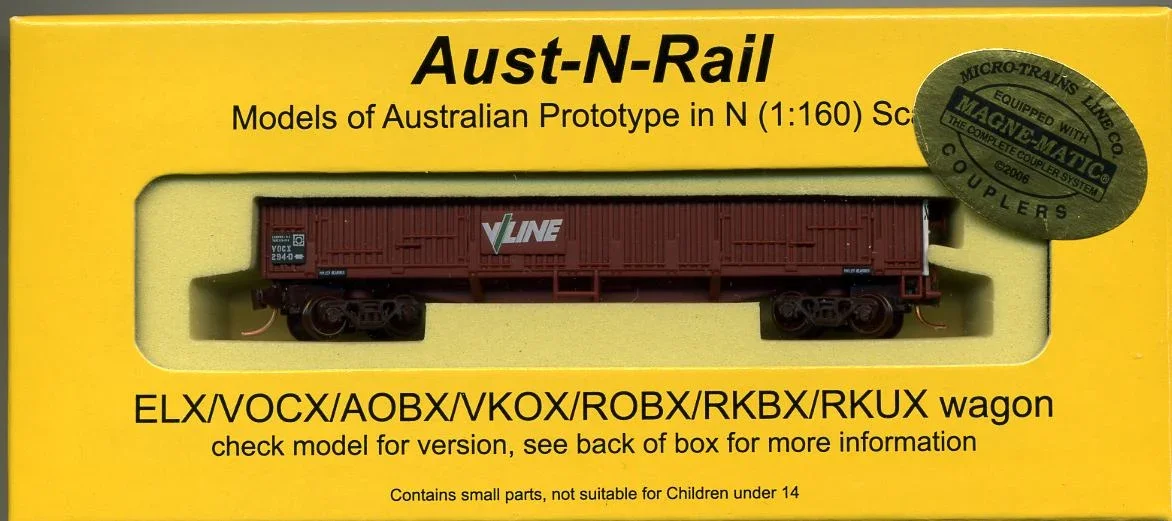
Rob Popovski: It sort of helped me along. There, yeah, I was a long time smoker, and then thought I'd yeah want to try and kick the abit, and I said to myself, every pack I'd, or put it this way, every pack I don't smoke. If if I had if I went through a whole week without um having a cigarette, that I'd go to there was a place Punch Bowl Hobbies, you know, back in Sydney, and it was like one of one of the train train um one of the hobby shops that I really loved going to all the time, and and they had these wagons from Aust N Rail, and they were just these ELX's in N Scale, and they and they were one of the first to be injection molded, you know. And I was like, they looked really good, and I think back then I think they only like I think I was 30 bucks for a wagon, and I said to myself every week I go without a cigarette. That week, I will go buy one of those wagons, and so you know, punch bowl hobbies. They had like about I think it was about 20 or 20 on the shelf, and I think it was by the end of I think it was about four months. I emptied them out, so I bought all their wagons, and it was like, what am I going to do with 20 of these things. It's like only wanted like a one or two, but end up having 20 of them. And I thought, oh, hang on, I've bought all them out. There's nothing else there to buy. So what? What am I going to do? You know. So it ended up being a Mars bar. So if I didn't have a cigarette that day, I'd have to get a Mars bar, and I remember there was one time I was going off to. I think I think I was driving home, and I'm going. I'm really angry for some reason. I'm going. It's because they haven't had me Mars. If I didn't get a Mars bar by 2o'clock, I'd be ropeable. So here I am in my truck driving home, and I'm just I'm just angry at everyone, and then I'm thinking, why am I so angry? It's because I never had a Mars bar. So pulled up in the first servo and had this Mars bar, and I was good to go.
Mark Jesser: So, so you do you put do you put those Aust N Rail rail wagons and a Mars bar sort of down as the reason you you stop smoking?
Rob Popovski: It's definitely a reminder. Like if I'm going in, if we're going on an exhibition and I'm pulling out wagons, putting me suitcase of water going to run on the exhibition, and then I, and I come across an ELX, yeah, definitely strikes a nerve. It's like thinking, oh crap! And I've never run them. They've been in their boxes. They've never been run. There's 20 of them sitting there. Wow. yeah. I just I can't open them. Yeah, like it's a reminder. So yeah, if anyone wants some ELX's, yeah, look me up. The
Mark Jesser: hobbies obviously changed a hell of a lot in your time. You know, you've gone from not being able to have a 3d print at home to you know dozens of different ones you could have in your house and use you know at any moment you've also seen a change from DC to DCC. Is there something you would like to see you know be available in the hobby?
Rob Popovski: Yeah, that's a never even really thought about it. Maybe I'm old-fashioned because I, like I say, the grassroots and building structures is is what brought me into doing N Scale, but something new. I mean. I mean, DCC was yeah out there, and was it's amazing technology. I mean, and now you got locos, they've got sound. Like, I don't know if there's that much more realism you can actually get into a train. I mean, how do we improve it? And and and this is a question you got to ask. I mean, I'd like to see a lot more steam engines like ready to run, but I know that's hard. I mean, you know, for for a manufacturer to to do something, he's obviously got to sell it, and it's not for everybody. So, I mean, 3d printing's. How can I say 3d printing's making it more more accessible to do steam engines. Yeah, of course, but there's a lot more to it than just. I mean, anyone can draw up a steam engine. It's making it work is a hard part, like trying to find a mechanism or trying to modify a mechanism. It's really really tricky. So I think that that's why a lot of people, even the professionals, stay away from it because it is a hard process. It's a hard slog. I mean, it's one thing to make it work. It's another thing to make it reliable.
Mark Jesser: And someone starting out in the hobby, you know, today, tomorrow. What advice would you give them in terms of picking a location to model?
Rob Popovski: Yeah, model something that you want to do, not because somebody's told you to do it. You've really got to have a passion for it. So you know, if if somebody says no, you should be doing this. You'll probably start it, and then you think, no, it's not what I really want. Where, as if it's somewhere that you want to model, you will, you'll have that drive to to see it through, because yeah, you do. It's like a writer's block. I don't know what they call it in the model railway world, but yeah, you do come across it where you just don't want to touch it, so yeah, and you won't go back to it for about six months or even a year, you know. So yeah, definitely got to have passion for where you want to model. Maybe on here it might not make a lot of sense, but if you do see one of the boys or me out there, just come up and have a chat. You know, I might be able to explain it to you a bit better. You know, it's it's hard for me to um talk talk to the outside world on this thing, but yeah, like we're a good bunch of guys, and then yeah, like if you need to know anything modern railway wise, especially in Australian N Scale, just come out of chat.
Mark Jesser: Thanks very much for joining us on the podcast, Robbie. Thank
Rob Popovski: you very much, Mark.
Mark Jesser: And that's a wrap for another edition of the Australian N Scale Podcast. Opinions of those on the podcast are their own, and we hope you've learned something from today's episode. Head over to nscale.au for detailed show notes, extra information, and photos. Hit the subscribe button, and until next time, go Aussie N scale. See ya.