Ian wood
SHOW NOTES - TRANSCRIPT
Please note: This transcript was produced with the help of Otter. Corrections have been made although it is not perfect.
Ian Wood: I was I was born in Victoria, back up in Caulfield, or South Caulfield, but yeah, over the years we've moved around a bit, but we've settled back in Gippsland now.
Mark Jesser: What did you do for work?
Ian Wood: Well, I'm retired now, but many years ago, I was an optical technician, which is a fancy description of a spectacle maker.
Mark Jesser: Yeah, wow. Yeah, and and what did that look like day to day?
Ian Wood: Oh, it changed over the years. It started off as a a very hands-on type thing of of cutting glass lenses down to size and shape and fitting them into spectacle frames for people, but over the years, it technology caught up with it, and the machines were introduced that you know took over a lot of the actual manual holding of lenses and holding against diamond grinding wheels and that sort of stuff, but no. In the end, we had I had automatic machines that you still had to know what you were doing, of course. But my fingers were able to recover over the years of holding glass lenses against diamond grinding wheels, I ended up with bits of glass in my fingers and all sorts of stuff like that.
Mark Jesser: Yeah! Wow! Wow! And and did you do that for your whole sort of working career? Was that sort of yes?
Ian Wood: Yeah, it was straight out of school. Yeah, I looked at looked at a careers magazine at school when I was in what these days would be year 11, and there was an ad for OPSM wanted they called them optical mechanics in those days, and so I went and had an interview and liked the idea. They gave me a choice. Actually, I could have worked in the labs where you're actually doing the surface grinding, and that's a very noisy, messy, factory type environment, or you could work more in the retail end of things and wear a white coat. And I thought, I prefer to wear a white coat. Thanks.
Mark Jesser: And I believe you were first sort of got the train bug when you were about six.
Ian Wood: Well, yes, as long as I can remember, my dad had a clockwork hornby that came out onto the dining room floor every now and then, and so yeah, my dad introduced me to to model trains and to trains too. We used to go to Spencer Street and you know watch the trains there. So yeah, it's it's all my dad's fault. Hopefully, a good thing. Oh yes, yes. For a long time, I wanted to be a train driver, and in fact, pretty close to leaving school. That's what I still wanted to do, but my family actually convinced me that you know, there's there's other better things to do. Keep keep trains as my hobby, which I'm I'm pleased in a way that I did because you know, I think if you're working at something all the time, it can get too much. If
Mark Jesser: you were, if your father had introduced you to the sort of the Hornby set, why um why N Scale?
Ian Wood: Well, back back in those days, that was really all all there was, because we're talking about the you know early 1950s, and N Scale just wasn't there, and in over the years, I think it was about my 10th birthday. I got a triang OO train set for my birthday, and so I was into HO OO for my teenage years, and after we got married, we just lived in a flat, and there was no room really for a layout at all. But I figured N Scale had just come on the scene actually then, and I saw the advantages of the space you've got with N Scale. Oh, just to go back to the HO setup when I was a teenager, the house we lived in was built on a slope so that the the front of the house was quite high. In fact, high enough you could stand up underneath the lounge room, and I had the HO or double O triang in my bedroom. After it got around three walls, I thought it's getting a bit big for the bedroom, and so under the house, we had red gum stumps, and I carefully levered off the diagonal bracing off the red gum stumps, and turned them horizontally, and they became the base of my layout. My mother was quite convinced that your house was going to fall down when I was removing these braces, but it didn't. So yeah, I built quite a reasonable HO layout under the lounge room, and that was that's was there until I got married and moved out.
Mark Jesser: Yeah, wow. So, so your first layout was really ho.
Ian Wood: Yes, yes. When I was when I was a kid.
Mark Jesser: And and when did you sort of you know we we sort of say when did when did you take it more seriously? When did when when did you sort of start heading sort of towards the prototypical sort of side of things.
Ian Wood: Well, as I said, I had an interest in prototype railways as well, and friend a friend up the road who I became very friendly with. We ended up chasing trains on holidays and stuff like that, he introduced me to the ARHS, the Historical Society, and that gave me the chance to really get to know Victorian Railways prototype stuff.
Mark Jesser: And you lived in WA for a little bit as well. How long were you over there for?
Ian Wood: After we were married, about three years after, three or four years after we got married, I was looking for a change of career, or not so much career, but location. I'd reached I'd reached a point with OPSM where I'd gone about as far as I could go. There was not much prospect. I was a branch manager of OPSM shop by the time I was 21, and there was a lot of other more senior managers ahead of me. And as I said, my career options, you know, didn't look all that promising. So Fran's parents had moved over across to Perth, and so we went over to visit them, and actually fell in love with Perth because way back in 1975, Perth was still a big country town, and was very relaxed and laid back compared to Melbourne, where we were living. So I quit my job and moved over there with no house, no car, and no job, I did sort of any sort of work I could for a while until I realized that the only qualifications I had was as a spectacle maker. So I actually started my own spectacle making business, and it grew from there. And we were we were there for 33 years in WA.
Mark Jesser: Did you get time to catch many of the trains over there?
Ian Wood: Yes, yes, a bit, quite a bit. My my heart was still in Victoria, as far as railways went. I firmly believe that people model what they grow up with, and my teenage years, you know, was firmly influenced by the VR, particularly that transition period between steam and diesel in the 60s and 70s, so that's what I model now. Actually, is that transition between steam and diesel? A lot of people don't realize that it didn't happen suddenly. It was over 20 plus years when steam was still around and diesels were coming in, and quite often the two worked together, double heading. Although the interesting thing is, early on, the VR said that they want the diesel to lead, not only for public, you know. Just the good looks, but also they feared that if the steam engine led, the diesel would suck in all this nasty soot. They worked out years later that it didn't actually happen like that. But anyway, so and yeah, so for 20 plus years you could see both steam and diesel working.
Mark Jesser: Your time as a spectacle maker, how has that sort of influenced your modelling? Obviously, there's some fine skills needed in that area.
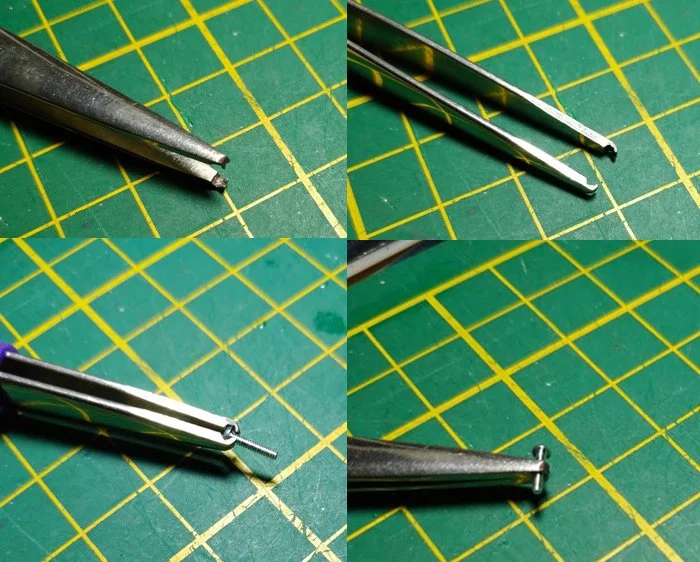
Ian Wood: It did. I think it did hone my, as you say, call them fine skills with all the little screws and stuff that goes with it, and the tools needed, and I still have, you know, most of my tools that I use the old spectacle making pliers and files, etc. and all that sort of stuff.
Mark Jesser: Yeah, right. And can anyone just just on the on the tools side of things? Can anyone buy those tools?
Ian Wood: They're they are yeah they are available. They're really pretty much the same stuff as you can get from the better hobby suppliers. You know, as far as needle files go, and tweezers, and there's one particular one that I have kept, and that is a screw holding tweezer. That the the jaws on it are just shaped perfectly to hold the head of a small, you know, really tiny screw, and they come in very handy. Actually,
Mark Jesser: in 2013, you ran a clinic at the convention based on styrene and scratch building.
Ian Wood: Oh, you've been doing your research, haven't you?
Mark Jesser: I've given it a go, and why? Why do you think? Why do you do you think? Do you still think those skills are important now that we're seeing, you know, a lot of 3d printing entering the hobby?
Ian Wood: Well, look, I think it's it's whatever you're comfortable with. I, you know, I got involved scratch building, of course, before 3d printing came along, and I know there's a there's a a bit of argy bargy goes on between the newer modelers and the older modelers like me about which is really scratch building, but if if people, I think the 3d printing thing is great. In fact, I've utilized some guys who do 3d printing to make stuff for me. You know, I'm I'm not that much of a rabid person who will not touch it, but I don't have a 3d printer myself, but I know several guys that do, and if I need anything, I know who to contact.
Mark Jesser: And do you remember in 2013, long long time ago now. But do you remember sort of what were the the main messages you were trying to sort of get across in that clinic?
Ian Wood: Just that styrene is a very useful material to work with. There's a lot of satisfaction in making something I find anyway. Making something yourself. I know there is there's a certain skill level for 3D printing. You've got to be able to program your computer, and you've got to know what you're doing so much. But once it's ready and you press the button, you know the computer and the printer is doing all the work, but you've got to put in a bit in the start to prepare it. So that takes a bit of skill, I think, that I don't have.
Mark Jesser: When you started playing with styrene and scratch building, was there someone that sort of influenced you or taught you those skills?
Ian Wood: Yes, I got involved. I went to the the first N Scale convention in Melbourne. I can't remember the exact year, but well, it would have been. No, I'd have to look it up. But Kent Smiley had a clinic on styrene building, and in the clinic, he built just a 20-foot container out of styrene and showed you how to cut styrene, and you know. How to assemble it and all that sort of stuff, and that was really very useful. So Kent, Kent Smiley sort of put me onto working with styrene in the first place, and I've sort of carried it on from there. I mean, Kent still is doing styrene building these days.
Mark Jesser: I guess that leads me perfectly into the next thing I wanted to talk about, which was the Victorian N Scale Collective. Kent Smiley was member number one. Graham Dunn was member number two, and I believe yourself you are member number three.
Ian Wood: That's correct.
Mark Jesser: Obviously, you guys-did you guys know each other before all this?
Ian Wood: No. When Kent gave that clinic at the first Melbourne N Scale Convention, at the end of his presentation, he said, "If anybody's interested in forming a group who particularly are interested in N Scale and Victorian, you know, leave leave your name and contact number. So, I was the second person out to the desk to fill in my name, and yeah. So, and I think I think he got got about 10, eight or 10 names. I could be wrong there, but yeah. So that was the start of the Victorian N Scale Collective.
Mark Jesser: And for for people that don't know what the is, how would you how would you describe it?
Ian Wood: Well, it's it's as the name implies. It's just a collection of N Scale modelers that started off specifically modelling Victorian, but it's expanded now. That you know we have got members in different states who are modelling their local prototype mostly, so it was decided rather than have our club rooms, if you like, like a lot of clubs do, that it was much more convenient just to get together in people's homes, and that's that's still the case. So they don't have the the problems that arise from club rooms, and it works well. Yeah,
Mark Jesser: and a part of the membership is being a part of like the the online sort of sort of like a chat a chat group. There's also a a monthly newsletter that's put together that be safe to say it probably be the best in scale newsletter in Australia, if not the world. How important is that newsletter?
Ian Wood: Oh, it's very. It keeps the whole group together. You're right. You know, and having the website, people are always, you know, posting a question. You know, where can I get this sort of stuff? Where can I, or what do I do? In I'm having problems doing this, you know, and people, you know, are really helpful. Come back and say, you know, have you tried doing this? And I'm pretty sure it's every two months the newsletter comes out, and that's now online. It used to be a typical paper mailout, but with so many people now on the web, it's it's gone totally online, and of course that's great because you can get all the color pictures and everything, and it's it's it's cost wise it's much better.
Mark Jesser: What did those initial meetings look like when you when you guys first started the group?
Ian Wood: Well, I was living in WA at the time. I'd come over to Melbourne to go to this convention, and so I was living in WA, so I didn't actually get to physically go to a lot of the early gatherings, if you like. Once, once or twice, when I was over visiting, my my dad was still living at the time, and so I would come over and see if I could tie it up with the you know the same time as a monthly meeting, so I did attend a few early ones, but eventually, yeah, we sold the business, and I decided that you know, I'd like to move back to Victoria, so we did that move. Back in 2007, and that's when I really got more involved in the . Even though I was member number three, actually I was member number two because Kent never gave himself a number, and so for many years I was number two, but later on the secretary realized that Kent didn't have a membership number, and rightly the committee decided that you know he should be number one. He started it all, so the secretary gave him member number one, and everybody else moved down one. So I was number two. I then became number three.
Mark Jesser: You are widely known for being incredibly open with your techniques and and sharing your knowledge. Why is it so important to share what you know?
Ian Wood: That's just that's just how I am. I think I I come from a family that you know always did you know share knowledge and you know help people no matter what it was you know they were doing.
Mark Jesser: Congratulations! You were recently given a life membership to the club. How how special was that?
Ian Wood: Oh, it it blew me away. Martin Watts, the secretary, rang me up. They'd they'd had a committee Meeting, and that night, as soon as the committee meeting was over, I was unaware of all this. He rang me up and and told me that I'd been made a life member, and I I was just stunned because a I wasn't expecting it, and I was just lost for words. and And I was doing a lot of, and I said, "I don't know what to say, and I said, "I, you know, I hope I I live up to the the accolade. And he said, "You don't need to live it up. You've that's why you're a life member. You've you've already done the the the work or the the contributions.
Mark Jesser: In talking to people over the last couple of days, a lot of people have said that you were the founder of Sedum Trees for the for the for the club, and and many members now have got sedum trees across their layout. How does it feel to sort of be the the the mastermind behind the sedum trees?
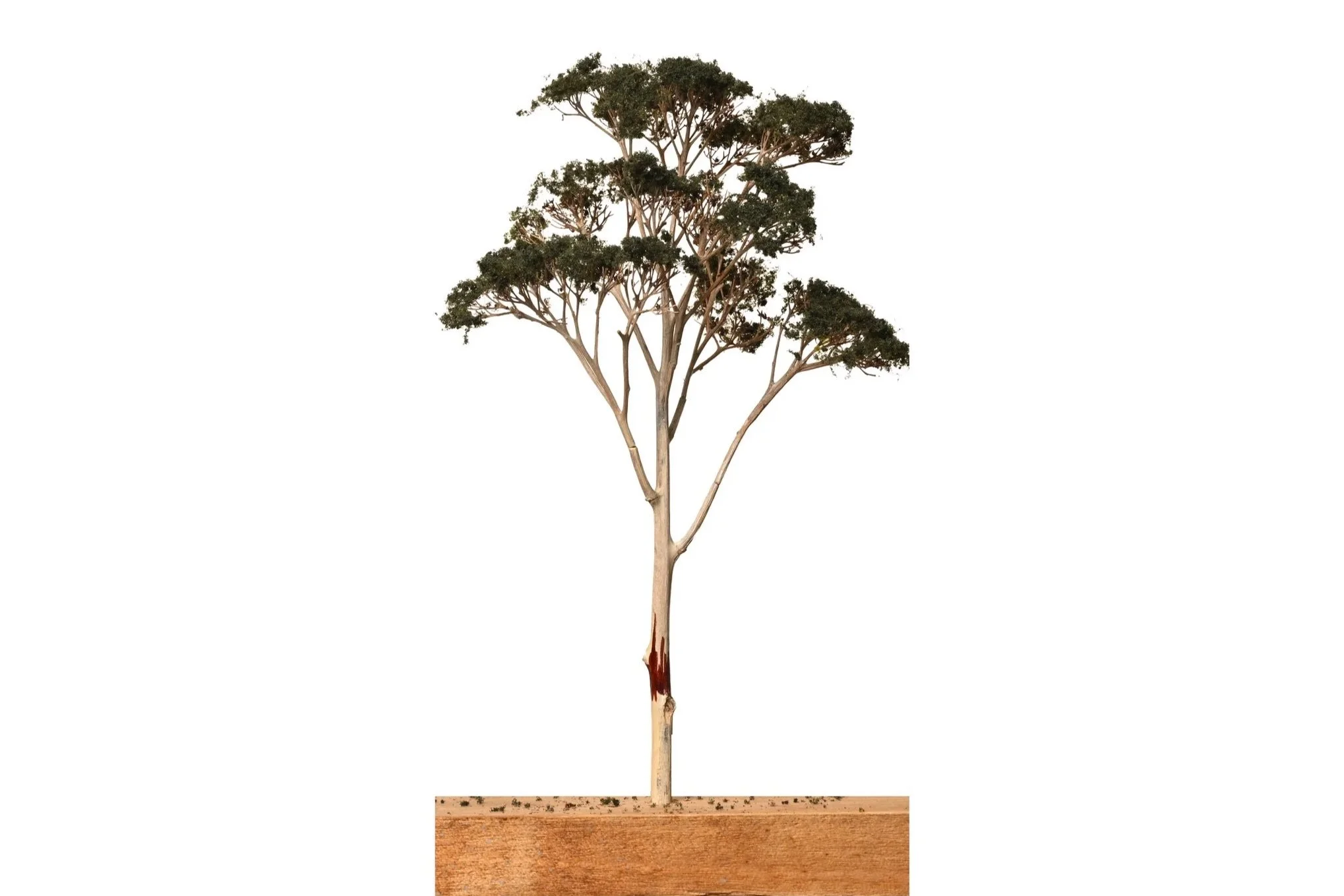
Ian Wood: Oh, look, I I don't consider myself the mastermind. The story with the sedum was that quite a few years ago I went the VMRS, the Victorian Model Railway Society. I used to be a member when we lived in Melbourne before we moved across to WA. But they put on, I think, every two years, a a day of clinics, and they called it modelling the railways of Victoria. It wasn't wasn't any particular scale. It was just anybody who's a modeler of Victorian prototype, and they had it over at Thornbury High School, I think it was, and was well organized. And again, you had a choice of clinics you could go to. And I went to a clinic given by this guy, and I'm sorry I can't recall his name, but he was using sedum for making gum trees, and it was very. I was very impressed, and like a lot of things, nothing's nothing's original. It gets built on, and what he was doing was just using the sedum, the dried sedum heads, and just coloring the tops green spray paint looked quite effective, but I thought I think I can make a gum tree that looks even better, and I'm not taking anything away from him because he gave me the idea. Sedum, when it's in its raw state, the flower head is the same all over. It's it's like a crown on the on the stem, but if you look at most or a lot of gum trees, they're staggered. So I thought I'll shorten the outside stem. Of the flour, or the dried flower, and I did that by chopping a piece out, and like like doctors that repair a broken bone, I inserted a wire, because sedum is is a succulent, so the stems are hollow. And by slicing a or putting a piece of wire in the hollow, and then rejoining, shortening the the stem on the outside, I achieved this staggered effect. And I also chopped off the dried buds, if you like to call them that, and replaced them with the woodland scenic foliage, which I thought looked better. So it was, as I said, with modelling with anything, you know. There's nothing original. Most of these people that are producing stuff, like take medicine for instance, you know, they look at what somebody's done in the past and improve on it, if you like. So that's that's all I was doing was just sort of taking somebody else's idea, and tweaking it, if you like.
Mark Jesser: And now it's sort of become a part of the almost when you sign up for your membership of the club, you you've also got a couple of sedum raw plants ready to go for you to to have a go.
Ian Wood: Yeah, yes, yes, yes. I've got a a flower bed around the side of the house that I thin out every now and then, and give away the the plants themselves if anybody wants them.
Mark Jesser: Obviously, that technique has has grown a bit each each time you you make them. How has how has that process for you changed from that initial clinic to now, you know, with , the the 's newest and latest layout. Some of those trees would be still sedum, but maybe slightly modified. How's it? How's it changed? Like your your process?
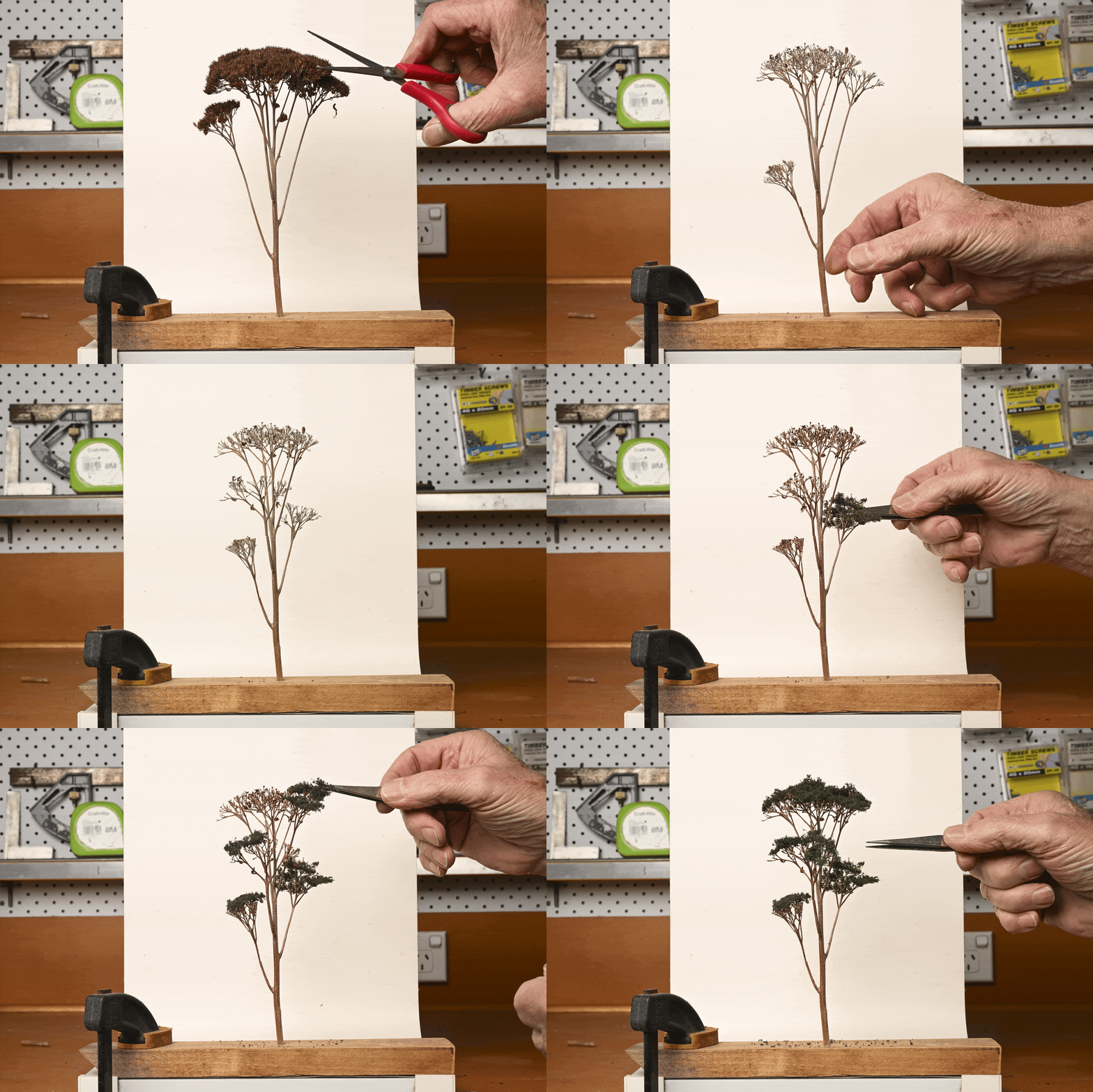
Ian Wood: Well, basically they are pretty much the same. I've I've done a few extra techniques of. You have you ever come across that craft stuff called what do you call raffia, raffia? It's sort of strips these days. It is paper. It used to be actually a plant, venereal material, but if you look at a lot of gum trees, when they shed their bark, the strips of bark fall off and get caught in the forks of the tree, and they just hang there, and sometimes they can build up to horrendous numbers. I've done that lately on a lot of trees by using these strands of raffia, soaking them in water and PVA, and sort of hanging them over the forks to simulate the the bark that's been shed and just hanging in the tree. A lot of people have given me ideas. One of them, Dave Crowhurst, at the last N Scale convention, he'd taken my idea and taken it one step further, which I think is fantastic. I'm really happy if people take an idea and improve on it. He, instead of chopping a piece out of a stem, he actually broke the stem from the main trunk. We'll call it. Shortened it, and then drilled a little hole where he broken it away from the main trunk, and inserted the bit of wire there so that you didn't actually see any join. And I thought that's terrific idea, Dave. You know, good on you. So I have done that a bit myself. Taken Dave's idea.
Mark Jesser: Is sedum the main foundation you're using for your trees? Have you tried any other tree methods that you've you've you've really enjoyed doing, or or is sedum sort of your preferred method.
Ian Wood: See, well, sedum is yes, my preferred method. I haven't had a lot of success with the twisted wire. I know people have. That's good, but the sedum works for me. So you know. If if you're on a good thing, stick to it.
Mark Jesser: Yeah, yeah, and they look fantastic. And for those who are listening to this and wondering a bit more about the sedum, there'll be a bit more information and some photos on the website nscale.au, which you can go and have a look at later. And in terms of the club, with the latest layout, . A lot of people have made made note of how many little details you've put in to that layout, and all the little fine things. When when do you think a scene is finished?
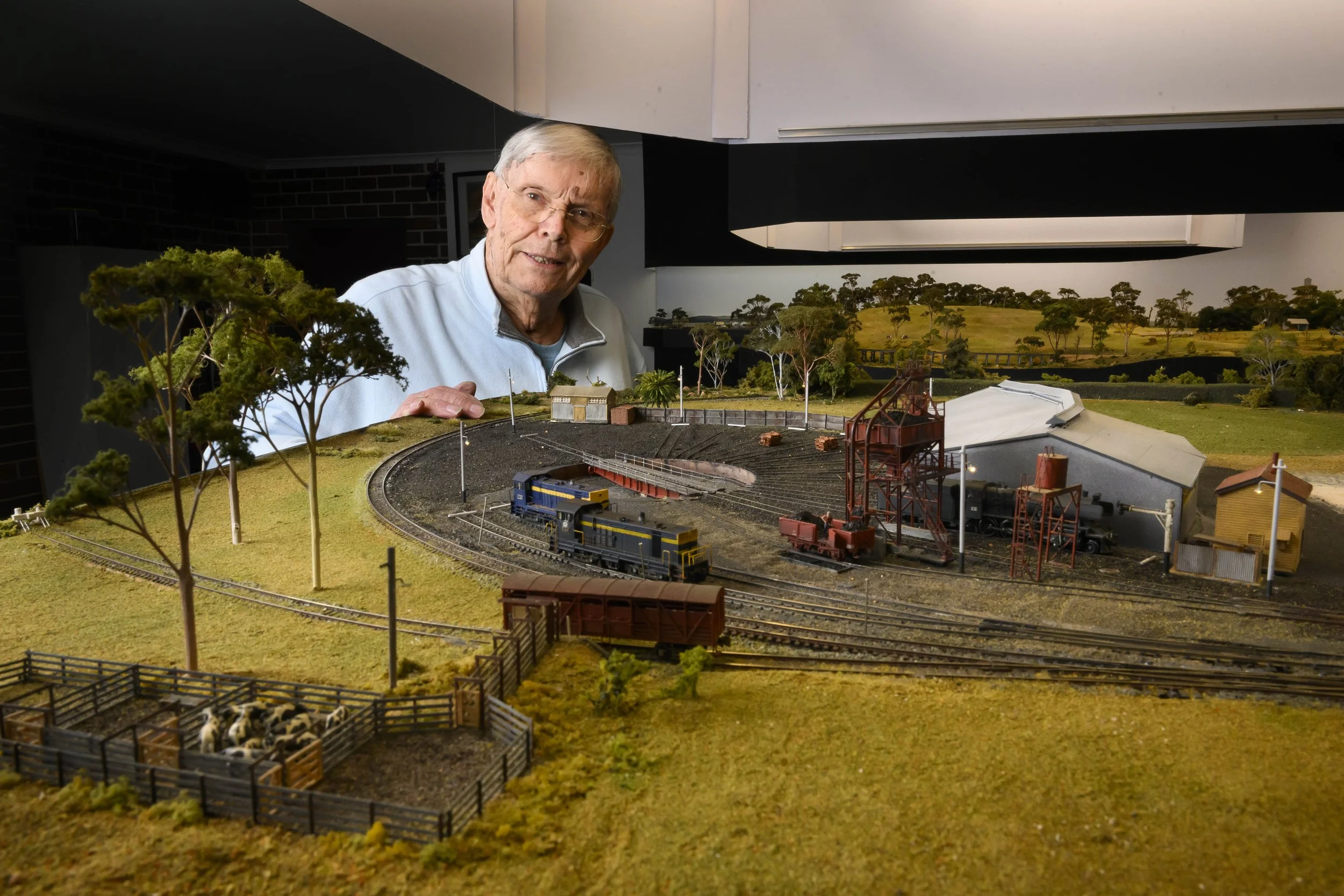
Ian Wood: Oh, yeah, that's a hard one. There, there is a point you've got to get to where you think that that's enough. You don't want to overdo it, but I think can do with some more because it's a big layout. But I didn't do all the fine stuff on there. For instance, Kent, Kent Smiley has done the stockyard, and a lot of other people helped doing fencing and all that sort of stuff. So it's not just me.
Mark Jesser: What what was your first layout like in N Scale?
Ian Wood: In N Scale, it was it was made so it would slide underneath my son's bed, so it was probably about five five by two and a half feet, and it was on casters, so it could roll underneath his bed, and it was simply a folded figure of eight, if you know what that is. So it was a continuous run that went up and over itself, and then back down under itself, sort of thing.
Mark Jesser: One of the first layouts I could find in the Victorian N Scale Collective newsletter archive was Benalla. Why? Why did you choose Benalla as sort of your main or your first prototypical layout.
Ian Wood: It had a lot of advantages. It was on the main northeast line, so I could run, you know, the spirit of progress, and you know, heavy freights as well as anything. It was also a junction station for the Yarrawonga line, and it was pretty ambitious as a layout. I had to compress it an awful lot. It it went into a bedroom of our house in in WA, and it went around the walls, so there was a duck under at the door. One of the interesting things about it was, it like most layouts, it was on legs, and with the curtains on, there was just this narrow walkway between a peninsula and around the walls, and it felt very claustrophobic. And I was talking to Fran about it, and she said, "You know, we'll take the curtains off. But I said, "Oh, then you've got all these legs hanging down, and she said, "Well, why does it have to have legs? And it got me thinking, and I thought, if I attach it to the wall with brackets, I can do away with the legs. So that's what I did, and it made the room, you know, look so much bigger with not having these curtains and aisles to walk down.
Mark Jesser: Did you have other layouts in between, sort of Benalla and and your latest layout in your shed here?
Ian Wood: No, because when we when we retired, I had always wanted to come back to Melbourne, and I had said that you know, when I retire, I'd like to do that. And so, when that's what we did, and so the layout, Benalla, like most layouts, was never completely finished. It had, you know, it was working. It had the track work and most of the scenery. I hadn't actually got around to building the station building, but I had all the plans. Anyway, we put the house on the market. And I left the layout there because it was really built into the room. And in fact, at one point, the real estate lady, I said to her, I had seen in one of the model magazines someone was doing the same thing, selling their home, and they Described it as a model train layout with house attached. So she actually, our real estate agent, put it. One of the ads she put in the magazines was, you know, comprehensive model railway layout with house attached.
Mark Jesser: Did anyone buy the house just to get your layout, or
Ian Wood: no, no? But the layout stayed in the house. But there was one guy. Just just to diverge a little bit, when we lived in WA, of course, I was the only person modelling Victorian railway stuff. Everyone else was either modelling WA stuff or American, because this is back in the 70s, and so I I had joined the Australian Model Railway Association (AMRA) in Perth. Got very involved in that, and because their layout, we built an N Scale layout there, and because the predominant prototype was American, I started modelling American N Scale, in particular Union Pacific. Anyway, when we decided to move back to Melbourne, I thought, right, it's a chance I'll go back to modelling Victorian stuff. So I sold off all my American stuff on eBay, and one of the guys who bought quite a bit of it lived locally, and when he found we were moving, he said, "If the people who buy the house don't want the layout, give them my name and number. So I did. Anyway, he apparently cut up the layout, and I believe it was actually offered on eBay. Whether it's sold or not, I don't know. But yes, no. The people that bought the house, they didn't want to keep the layout.
Mark Jesser: That's a shame, isn't it?
Ian Wood: Yeah.
Speaker 1: Yeah.
Ian Wood: But anyway,
Mark Jesser: your latest layout, East Blaney, featured in the 2024 October edition of the Australian Model Railway Magazine, a beautiful layout. Can you tell me a little bit about the name?
Ian Wood: Well, as as described in the write up that went with that article, Jim Blaney was a big influence on me as far as modelling. I got to know him at a Melbourne convention. Afterwards, Phil Badger said to me, "You want to see a really good VR layout and scale? And I said, "Yeah. So he said, "Come on. So we drove around to Jim's house in Mount Waverley, and Jim was modelling exactly the era that I want, or I was wanting to model. That is the 60s and 70s. Anyway, I got to know Jim. Little did I realize he had already influenced me unknowingly. Older modellers will remember the Royal Agricultural Show in Melbourne. The Victorian Railways had a pavilion, and in their pavilion they had a TT scale layout, which ran all blue and gold diesels, and in those days TT was the smallest available commercial model train stuff, and Jim and two other guys, Bob Dunn was one. I cant recall the other guy built this layout for the VR. Bob Dunn was actually an employee who was in the Way and Works department, and they had built this layout. And every time I would go to the Royal Show, that was the first place I went to, and pushed my nose up against the glass on the outside of the building to to look at this, you know, and it just was a big influence on me.
Mark Jesser: And how old would you have been then?
Ian Wood: I would have been in my mid-teens, 1415, yeah. In 1915. Four, I was six years old. That's giving things away now. In 1954, the VMRS, who we've spoken about earlier, they put on a display in the Lower Melbourne Town Hall, featuring O scale Victorian Railways stuff, and Jim was a member then, as I said, unknowingly to me, because I was only six years old. He would have been about 20, I think, but don't quote me on that. But he was still a young, very young man, and he had done a lot of the building of the rolling stock that was on display for the centenary of the VR in the Lower Melbourne Town Hall.
Mark Jesser: Yeah, wow. And your layout, East Blaney. what, when it came to designing that layout, what, what were the main considerations?
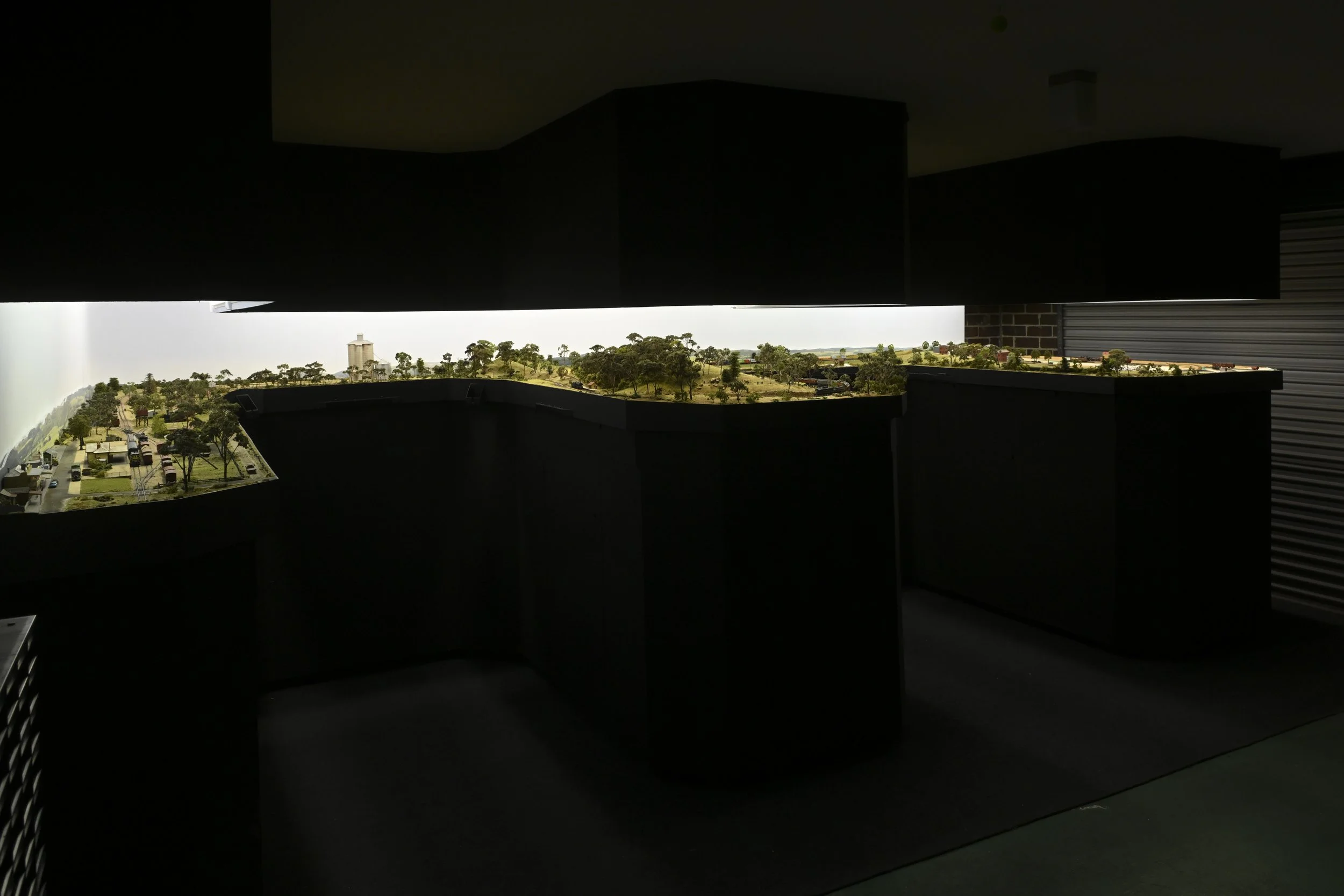
East Blaney by Ian Wood
Ian Wood: I I didn't want to model it on a specific prototype. I found with Benalla back in WA was interesting doing the research, but it's very difficult to accurately model a prototype in a space in the space you've got, so I decided to certainly make it VR inspired, as far as station plat station layout etc goes, but it's not actually modeled on a prototype VR. Also, I didn't want to have a duck under. I was not getting any younger, and I've found that you know duck duck unders are fine if you're young and agile, but so it needed to go around the walls. When we first bought the house here in Gippsland, there was a lovely three-bay shed in the backyard that Fran said, you know, that would be a fantastic crane room. So the story goes that I bought the shed and she bought the house. But anyway, at the time I had just been diagnosed with a blood cancer, so I didn't really know what my future was going to be. So, for the first 12 months we were here, I didn't do any modelling. I didn't buy any new clothes. I didn't buy thick books because I really didn't know what my future was, but anyway, after 12 months and I was still alive, I thought, "Bugger this! I'm going to start. But by that time, I'd realized we'd been through a summer, and the three bay shed in the backyard wasn't insulated, and whatever the temperature was outside, it was six degrees hotter in the shed. So in the summer, you know, we might get to 3840, degrees, but of course, inside the shed, it was like an oven, and I thought this is no good. Anyway, there's a there's a double garage in the front of the house that's under the main roof of the house, and we only had the one car. So Fran said, put the trailer down in the back shed, and build a layout in the other half of the double garage, so that's how it's ended up where it is. It doesn't suffer from the heat that much. So yeah, that was that was the criteria.
Mark Jesser: And there's photos on the on the website of your beautiful layout. When when we look at those images! This amazing trestle bridge, some beautiful buildings that you've that you've scratch built. Obviously, a lot of sedum trees. You've also tried to. When I last saw it, you you look like you were almost going to attempt a an oval, I believe. For people who don't know why, why is an oval a little bit of a touchy subject when it comes to modelling?
Ian Wood: You're talking about the footy oval. Yes. Well, it was one of those things. I had a space, and it's it's not a feature that does get modeled very often. Other people have modeled footy or cricket ovals, but I just thought, as a different sort of thing, it's it's totally out of proportion. I don't know exactly what its dimension. Are, but it hasn't progressed actually. But I do have plans. It's there. It's green and it's oval in shape. But it's yet to have a fence and a grandstand and the goalposts put on there. But so yeah, it's it's getting it to look okayed in dimensions. I mean, there doesn't seem to be a standard size. I mean, we live in Gippsland, and we often, or we certainly when we first moved here, on the weekends, would go and have a look at the local footy grounds, footy grounds, and yeah, none of them are the right, exactly the same size as each other. Anyway, I mean, you look at the MCG; it's round, it's perfectly round. It's not an oval. So yeah, there there isn't a standard size, and one of the local footy grounds here, not far from where we live, actually, one time we went there, and they had to, they had to scoop up the cow poo, because during the week the farmers were using it to graze cows, and of course you know, they had to go around and clean up the ground before they could play.
Mark Jesser: And have you got a favorite scene on the layout? That's something that you're you're really proud of. Is there something that stands out to you? Oh,
Ian Wood: nothing in particular. It's probably the latest thing I'm working on is my favorite, and once I've finished that scene, you know I'll do another one, and that'll become my my favorite. At the moment, it's the locomotive depot at East Blaney, which is not in any pictures. Oh yes, actually the latest edition of the VNSC newsletter that's only just come out does feature a picture of the local depot and the coal stage. So, yeah, not a lot of people have seen that yet, and I'm I'm still working on that. I don't work on one thing at a time. I don't know about other modelers, but I'll often have three or four projects on the go simultaneously, and there's a couple of reasons for that. One of the things is it gives you time for the paint to dry or the glue to dry, whatever you're doing. So while that's drying, you know I'll be doing something else, and also it doesn't give you the chance, or doesn't give me the chance to get sick of it. If I find myself getting a bit sick of it, then I'll put it aside and go back and do something on the other project. I've only just finished a couple of shops. They've been sitting on my desk here for a few weeks, but they're back on the layout now.
Mark Jesser: Your wife Fran has been a big supporter of the layout and and obviously trains as well. By the sound of it, how special is that? Have you've done much together in terms of modelling?
Ian Wood: Not so much together, but she has done some scenery work on the layout. But she is a great inspiration. I mean, going going back to them and at Benalla layout. You know, why do you need legs there? But quite often, if I'm getting stuck on something, I'll talk to her about it, and she is great at giving me a different perspective. For instance, on the layout on East Blaney, there's a road overpass, and the bridge. I modeled on the style of bridges around Bendigo, those red brick road over bridges, and the coping or copping on the tops is granite, and I was trying to model the granite, and I was trying some of the things like I think it was Ross Balderson Was using MDF and sort of carving or shaping it, but I couldn't. I couldn't get it. And Fran was telling her, you know, what I was trying to get them to look like it, and she said, "Have you ever seen the?" Inside of egg cartons, so we go to the fridge, pull out the egg carton, and sure enough, on the inside of the what is really a paper mache, it's got a rough texture on some of the egg cartons, just perfect. So she put me onto that, so chopped out a piece of the egg carton, chopped it into little blocks, and that became the coping on the top of the bridge. So she's a great inspiration. Yes, if I'm getting stuck on how am I going to do this, I've I got to get a lot of enjoyment out of the thinking side of modelling, you know. And yes, when I reach a point where I'm just don't know what to do, I'll talk to her about it, and she'll often come up with this crazy off-the-wall idea that works. She comes along to model train shows with me, but we we had an arrangement actually that she she is very much into craft things, particularly patch work and that sort of thing. And so, if there's a craft show on, you know, I'm quite happy to go along to her craft shows and stuff like that. And you'd be surprised what you can actually find yourself at those places that can be can be adapted to model model making. My my desk lamp here actually came from a craft show, and I'm working on a cyclone wire fence at the moment to go around the logo depot, that is actually ribbon, very fine woven ribbon, which is just the right size for chain link fence. So anyway, she's she's been a great inspiration, help, and I'm happy to help her as well in return.
Mark Jesser: You've seen a lot of change from when you first started. You know, a lot of locomotives and things like that wouldn't have been available. How has it sort of changed for you? Like, what do you sort of get excited about these days when you when manufacturers are making things, and and things are starting to change a little bit. Maybe a little bit less hands-on. Maybe there is a bit more buying off the shelf. But how has things changed? Do you think what what have you seen?
Ian Wood: Oh yeah, an awful lot. I mean, when I first started modelling VR and Enscape, what got me started was, I was working in Hawthorne at the time, and I went over to Camberwell Junction in one of my lunch hours, and there was a model shop just near Camberwell Junction, and I saw an N scale Riverossi E8, and I thought it looks just like a Victorian S class, so I bought it and was able to chop chop it down to the right length because the E8s are longer than an S class, but everything was there, so yeah. My first kit bash model, if you like, came from a Riverossi Eight into a Victorian S-Class diesel. But no, in those days there wasn't anything off the shelf. I think you could get a New South Wales 38 class steam by Sentinel, but I think that was the only thing. Didn't take long. Fibrin came out with a VLX and an ELX, which I bought, but everything else had to be scratch built, but as you say, over the years, manufacturers have come up with a lot of off-the-shelf stuff. Now you can get, but I still enjoy the kit bashing and stuff.
Mark Jesser: And for someone who's listening, that's thinking about getting into Australian N scale or or just N scale generally, but we want to sort of give them a bit of a push into the Australian side of things. What what advice or tips have you got for them?
Ian Wood: I I think model model what you see, and I know a lot of the newer modelers in our group, anyway, and I'm sure it's the same in other groups. What they're influenced by is what they see, and that's why I have a mixture of steam and diesel. Because that's what I saw in my formative years. Teenage years are those formative years. A lot of modelers had train sets when they were kids, but then, of course, like like me, there came a stage in your late teens where other things are on your mind, particularly the female ones, and so model trains get put aside, or at least on the back burner. In my case, and it's only in later years when you have the opportunity to get back into it, whatever you feel comfortable in. If you're happy to buy stuff off the shelf and run it on set track, you know that's fine. It's it's whatever you're you're capable of or whatever you're comfortable doing, this T track is is great for people, particularly getting into the hobby, and I have no problems with that. But yeah, just whatever you're comfortable with.
Mark Jesser: And what are you working on next? What's what's next for you in in terms of Australian N Scale?
Ian Wood: There's always lots of plans. There's there's a few prototype ones that I'd like to model that are not available Commercially, I've actually got the mechanism for a VR D3 Steam logo. I'll see if I can get that built before Badger does.
Mark Jesser: And and just quickly on on that, what what is the what is the process of of building something like that?
Ian Wood: Well, as I said, I've got the the donor logo. Most modelers will take the chassis off a commercial model and build built the the body over it. It's it's very difficult to build entirely from scratch the chassis etc. All wheels and gears. But I read an article in an American magazine actually years ago when I was just starting to scratch build or kit bash, and that is, if you are not prepared to throw the commercial item in the garbage bin at the start, Don't start, because sometimes I've I've got to a stage where I'm I don't I don't even think about you know making a mistake. I'll take the donor loco and get stuck into it with the the Dremel or a hacksaw. The first time I did that, yes, I was very, very worried that I was going to ruin it. And yes, there's been a few that ended up in the in the garbage bin, but that's how you learn.
Mark Jesser: Woody, thanks very much for letting me hang out here in your office, and yeah, really appreciate your time.
Ian Wood: Oh, thanks, Mark, for giving you giving me the time.